

Violence and Unrest: The Recent Riots in Los Angeles
Overview of the Protests
A string of violent protests swept through Los Angeles as demonstrators expressed their outrage against Immigration and Customs Enforcement (ICE) operations that resulted in the arrest of over 100 undocumented immigrants. The protests, ignited by a series of raids executed last Friday, spiraled into chaos by the weekend, leading to widespread destruction and public discontent.
The Scenes of Chaos
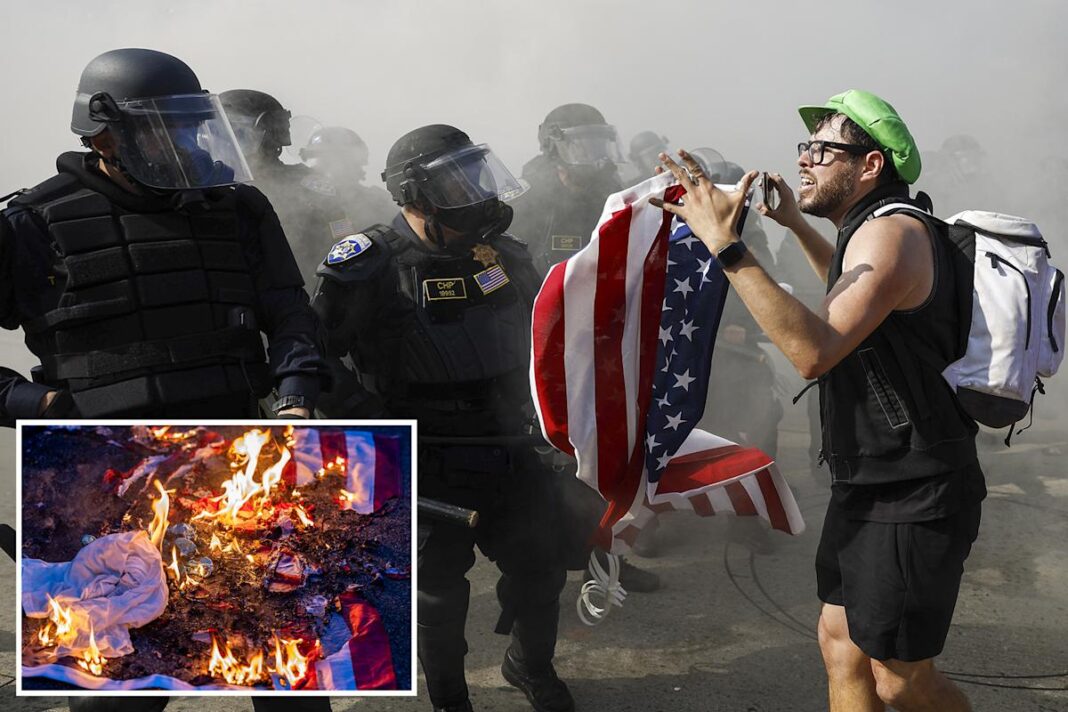
Footage captured during the unrest presented disheartening scenes: protestors attempted to burn an American flag while chanting inflammatory slogans and calling for destruction. Activities escalated as fires were set, and chaos erupted, drawing the ire of local residents who felt these actions were counterproductive to their cause.
“What’s the point of protesting right now? It’s just harming the community more than it’s helping,” remarked Eddie Velazquez, a local business owner witnessing the impact firsthand. The visible disdain among business owners conveyed a sense of helplessness as looting spread to nearby stores, turning an anti-ICE movement into anarchy.
The Beginning of the Protests
The protests were sparked by ICE’s targeted raids throughout Los Angeles, and initially drew hundreds of participants carrying anti-ICE signs and Mexican flags. Demonstrators faced off against law enforcement, but quickly devolved as the protests turned into reeled out semantics of fairness and justice. While the aim was to voice discontent over immigration practices, the methods employed soon overshadowed their messages.
Community Impact and Reactions
The local community, primarily composed of immigrants and their families, was torn. Many felt the destructive behaviors contradicted the very essence of their struggle. Pedro Perez, an employee at a local shop affected by looting, voiced concern about the damages inflicted on the businesses owned by community members. “Spray painting and all this damage, that’s not helping anybody,” he lamented.
Meanwhile, Maria Fabila, the owner of a downtown dress shop, reported customers canceling orders out of fear, equating the unrest with a dismal atmosphere in the heart of her community. This perspective illuminated a growing divide: while many supported the overarching cause, the methods of some protestors disheartened others.
The Role of Law Enforcement and Government Response
As tensions escalated, law enforcement officials reported significant damage and criminal activity occurring amidst the protest. In response to the surging violence, President Trump ordered the deployment of the National Guard to Los Angeles, further igniting political tensions. California’s Governor Gavin Newsom expressed outrage over the president’s orders and hinted at potential legal actions against the deployment.
The ICE raids, as clarified by ICE officials, were part of an elaborate investigation into criminal activities, rather than a simple immigration enforcement operation. This nuanced explanation seemed lost amidst the chaos, as misinformation and emotional responses ran rampant.
Organized Groups and Political Implications
Several protests were reported to be organized by groups with political ties, including those connected to the Democratic Party and even affiliations allegedly linked to foreign influences. Such connections raised questions about the motivations behind some elements of the protests, suggesting that the unrest may not solely be about immigrant rights, but also broader ideological battles.
The Aftermath and Confusion
The aftermath of these protests left a community grappling with its identity amidst violence, political strife, and societal division. With calls for more persistent and aggressive ICE operations, law enforcement’s promise to pursue justice against violators was renewed. Meanwhile, community members found themselves navigating the fallout and questioning the legitimacy of the protests.
The unfolding events highlighted the deep-seated tension surrounding immigration in America, juxtaposing the desire for social justice against emerging realities of violence and lawlessness. As the frustrations boiled over, the acknowledgment of those caught in the crossfire—the local business owners and residents—remained a painful echo of what had transpired in the streets of Los Angeles.