
Chaotic “No Kings” Protests Erupt in Los Angeles
On a vibrant Saturday in downtown Los Angeles, tensions reached a boiling point as hundreds of agitators clashed violently with police outside a federal complex. The event was part of the nationwide “No Kings” protests, which swept across Southern California and resonated in many cities throughout the United States. The demonstrations were sparked by various grievances, including opposition to the Trump administration’s policies.
The Escalating Tension
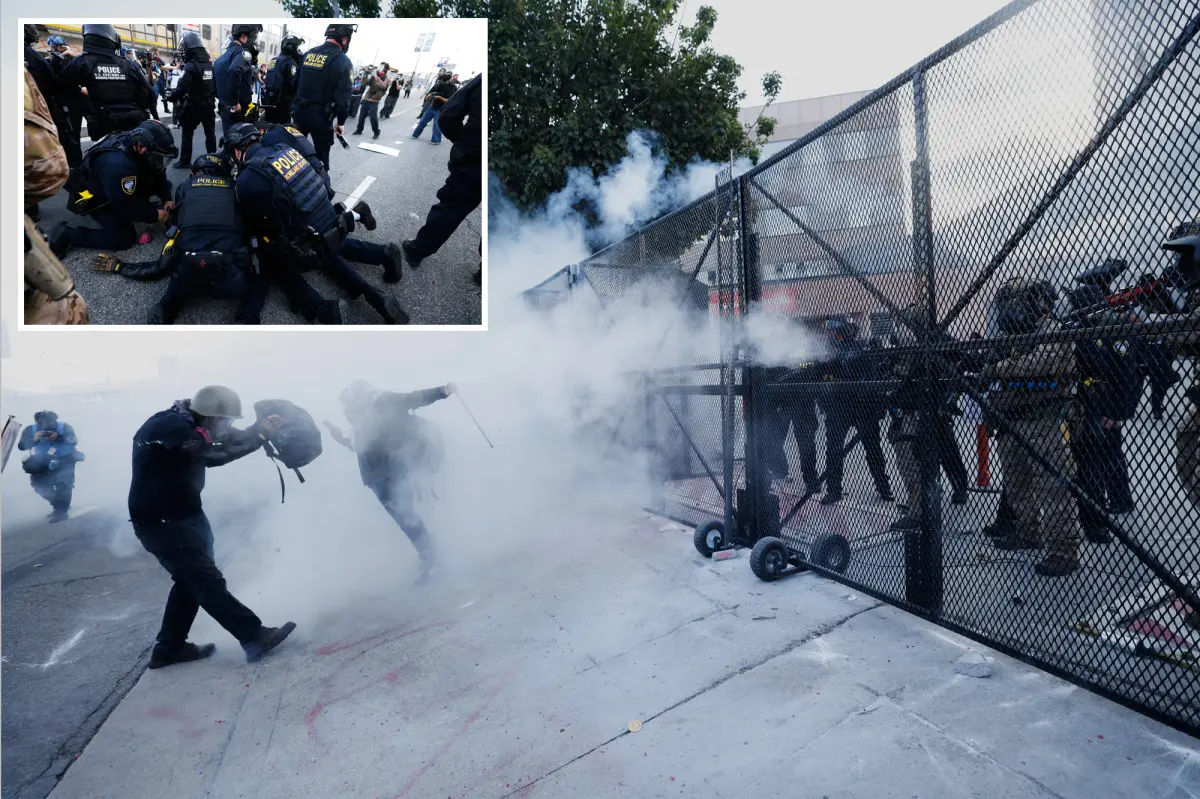
Around 200 protesters gathered, exhibiting a confrontational spirit as they taunted law enforcement officers. With shouts of hostility echoing through the streets, some protesters hurled obscenities while attempting to breach metal gates erected as barricades. One notably defiant voice challenged police, declaring, “F—k you, f—ing come and get me.”
Many demonstrators wore masks and rallied around themes such as anti-ICE (Immigration and Customs Enforcement), anti-war sentiments, and pro-Palestine advocacy. The atmosphere was charged with hostility, as activists utilized megaphones to incite the crowd, calling officers “scumbags” and urging them to engage in confrontation.
Authorities Respond
Despite initial attempts to maintain order, the situation quickly deteriorated. Protesters escalated their actions by throwing pink smoke bombs and other projectiles over the barriers. Authorities issued a series of warnings but were met with defiance. To restore order, LAPD officers deployed tear gas, which prompted a wave of chaos as the police moved in to detain various individuals.
Riot police, equipped for confrontation, took position to manage the situation, while officers on horseback were eventually called in to assist. Eyewitness accounts indicated the environment shifted rapidly from protest to riot, with local and federal law enforcement in high alert.
Rising Dissent and Arrests
As the melee ensued, reports surfaced of injuries and arrests. A woman nearby expressed concern for her detained son, urging others to flee from the volatile scene. Law enforcement confirmed multiple arrests, while the LAPD declared a citywide tactical alert around 5 p.m. due to escalating incidents near the federal Metropolitan Detention Center.
In an official statement, LA’s top federal prosecutor, Bill Essayli, noted that federal agents had come under attack, indicating the severity of the situation. He pledged that those responsible for the violence against law enforcement would be identified and brought to justice.
A Nationwide Movement
The protests were not unique to LA; they were part of a broader nationwide movement characterized by left-leaning radical groups aiming to challenge President Trump and his administration’s policies. The “No Kings” demonstrations, hailed by organizers as potentially the largest in U.S. history, saw millions expected to participate across all 50 states.
In Los Angeles, protesters voiced vociferous opposition to everything from immigration raids to international conflicts. Flyers circulated online demanded Trump’s impeachment, framing his administration as a “regime.”
Financial Implications for Los Angeles
As protests unfolded, attention turned toward funding and organization. Notably, one of the leading groups involved, the Liberty Hill Foundation, is a nonprofit backed by $14 million in taxpayer funding for tenant outreach and housing initiatives. Critics pointed to the financial burden on taxpayers, who are funding the administration’s response to the protests.
Notably, celebrity participation was prominent in the demonstrations, further garnering media attention. A gathering in Malibu attracted the likes of Doug Emhoff, husband of Vice President Kamala Harris, who mingled with celebrities at the rally. Emhoff’s appearance underscored the cultural dimension of the movement, blending social activism with high-profile endorsements.
Celebrities Join the Cause
The Malibu rally featured a diverse array of attendees, including comedian Kathy Griffin, known for her controversial past involving Trump, and actor Sam Elliott, who wore a T-shirt that boldly proclaimed, “Vote the bum out.” The participation of notable figures amplified the media coverage and visibility of the protests, illustrating how celebrity endorsement can influence public discourse on political issues.
The Aftermath
As the protests unfolded, both supporters and critics took to various platforms to broadcast their narratives about the events. While many hailed the demonstrations as a necessary act of political expression, others condemned the resort to violence and chaos. The widespread unrest reflected deeper societal divides and a growing impatience with the political status quo.
The “No Kings” protests illustrated the complexities of social movements, highlighting not only the immediate confrontations with law enforcement but also broader questions about civic responsibility, activism, and the role of government in addressing public dissent. The events in Los Angeles were not merely isolated incidents but part of a larger tapestry of nationwide unrest and calls for change.
Continued Coverage
As the situation continues to evolve, follow local news and social media channels for updates on the repercussions of the “No Kings” protests and the discussions they inspire across the nation. The intersection of politics, celebrity involvement, and grassroots activism promises to keep these issues at the forefront of public attention for the foreseeable future.