
Protests Erupt in Downtown Los Angeles: “No Kings” Rally Draws Thousands
DOWNTOWN LOS ANGELES (KABC) – A massive protest, dubbed the “No Kings” rally, drew thousands to downtown Los Angeles, igniting both fervent speeches and unexpected chaos as night fell.
Police Response and Tactical Alert
By Saturday evening, the Los Angeles Police Department (LAPD) was placed on Tactical Alert, blocking roads and making arrests as the gathering began to disperse. Authorities issued dispersal orders after a peaceful rally escalated outside the Federal Detention Center. Observers noted that the atmosphere shifted dramatically post-rally, as tensions rose between protesters and federal agents.
Background and Security Measures
In anticipation of the event, Caltrans crews had deployed security gates along the on- and off-ramps of the 101 Freeway to manage crowd control effectively. Past “No Kings” protests have seen demonstrators spill onto freeway lanes, causing traffic disruption.
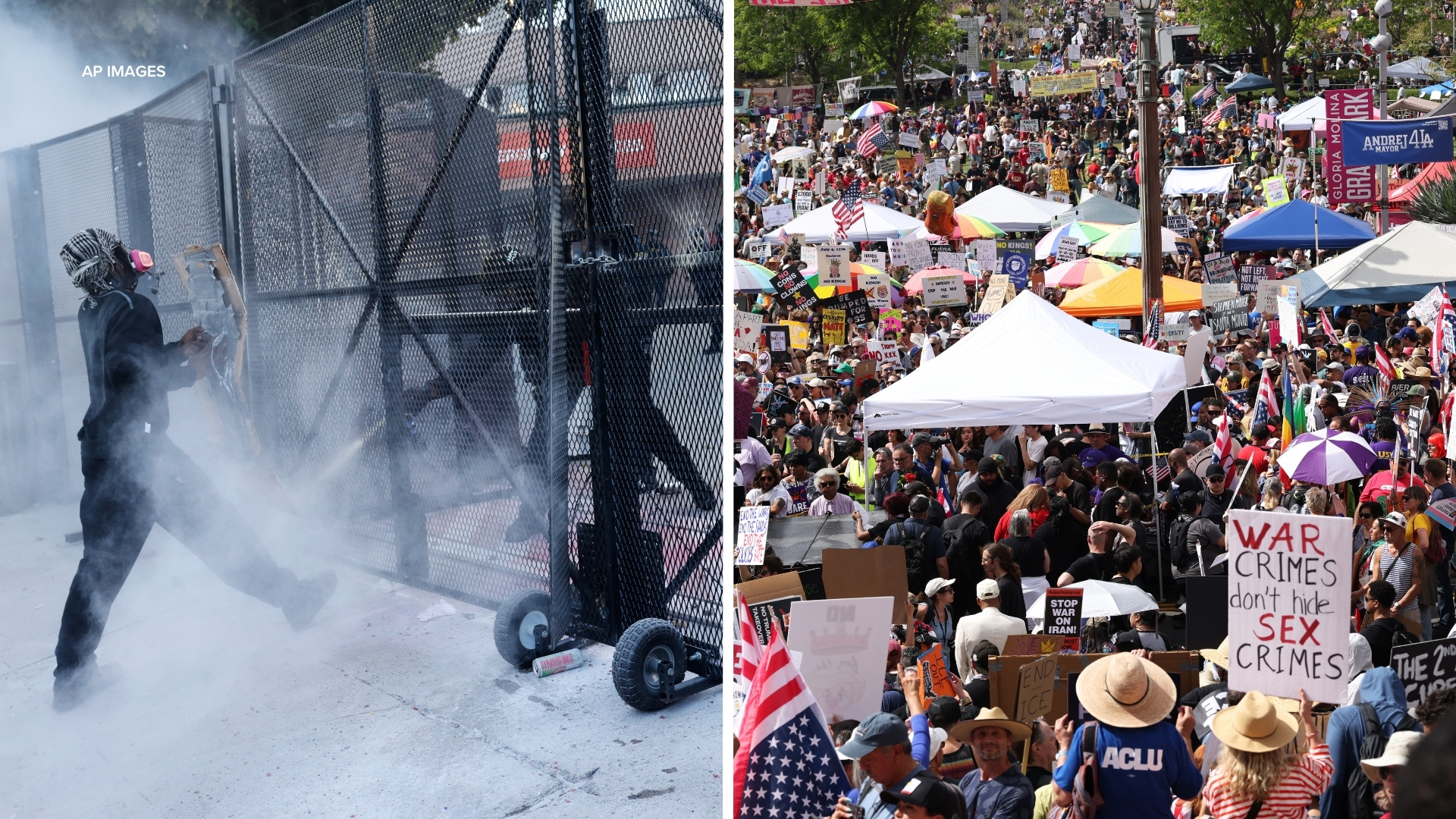
Nationwide, the organizers claimed this day marked the “largest single-day nonviolent protest in modern American history,” with estimates of at least 8 million people gathering across more than 3,300 events in all 50 states and several continents. While various protests were planned throughout Southern California, the largest occurred at Gloria Molina Grand Park, directly across from Los Angeles City Hall.
Unfolding Chaos After the Rally
As calm transitioned to chaos, a small group of demonstrators began confronting federal agents outside the Federal Building. Eyewitness reporters captured the LAPD, clad in tactical gear, forming lines along Alameda Street near Aliso Street. Multiple arrests were made, with individuals handcuffed and lined up against a wall, as tensions flared.
Protesters aimed to dismantle a chain-link fence shielding the Metropolitan Detention Center. Videos surfaced, showing some throwing objects at federal officers. By 5:30 PM, officers started confiscating items and deployed tear gas to regain control over the frenzied crowd. As an unlawful assembly was declared, the situation escalated, with protestors retaliating by throwing rocks and concrete at law enforcement.
The Heart of the Rally: Voices from the Crowd
Before the disorder, the atmosphere was vibrant and communal, with tens of thousands gathering to hear impassioned speeches from a diverse range of speakers. Participants expressed their motives for attending the rally, voicing concerns over issues ranging from immigration policies to threats against democracy.
“I’m out here today because I spent four years in the army… fighting against what’s happening in our country,” remarked veteran Don Napoli, capturing the spirit of many who felt compelled to speak out against perceived injustices.
Another participant, Patrick Feliciano, articulated his fears about the current administration, stating, “I feel like our administration is currently taking us down a path of fascism.”
Solidarity Across Southern California
Protests were not limited to downtown Los Angeles; they erupted in various locations across Southern California, showcasing widespread discontent with the administration.
In Pasadena, protesters took to the streets, with resident Kristie Baker reflecting on the anxiety the news from Washington instills in her daily life. “I think we’re all just longing to have our voice heard,” she said as demonstrators marched from Pasadena College to City Hall.
In Huntington Beach, a typically conservative area, demonstrators rallied against the administration’s policies, shouting slogans in support of immigrants. “We have to fight for our democracy,” proclaimed a local protester.
Festive Atmosphere in the Inland Empire
Meanwhile, the rally in Riverside adopted a festive tone as participants sang and chanted, voicing their grievances not just against immigration tactics but also against the ongoing conflict with Iran.
Across many neighborhoods, like Baldwin Hills, lone figures like Judy Bershak stood out, not allowing health issues to hinder her commitment to the cause. At 79, she displayed resilience while advocating for her beliefs, setting a poignant example of determination among the crowd.
Diverse Responders: From Costumes to Strong Messages
The “No Kings” protests were adorned with creativity, as some demonstrators wore costumes and wielded colorful signs. The gathering also represented a broad spectrum of issues, from rising living costs to international conflicts that hit home for many local residents.
“I can’t go downtown and march because I just can’t make it that far,” said Bershak, illustrating that participation in activism can take many forms, be it a large gathering or an individual stand.
Long Beach saw crowds lining Ocean Boulevard, while citizens in Claremont received honks of support from passing vehicles, solidifying the sense of community and solidarity present throughout Southern California.
This snapshot of the “No Kings” protests illustrates not only the fervor surrounding these events but also the larger narrative of opposition that continues to resonate deeply across diverse communities in California and beyond.