
The Aftermath of LA’s Twin Infernos: A Year Later
LOS ANGELES – A year has passed since the destructive twin infernos, the Palisades and Eaton fires, ravaged opposite ends of Los Angeles County. The scars left behind are stark reminders of the devastation that wildfires can cause, particularly in a region plagued by extreme weather conditions. Thousands of homes have been reduced to ashes, and while the flames may have been extinguished, the road to rebuilding is slow and fraught with challenges.
Speed of the Fires’ Spread
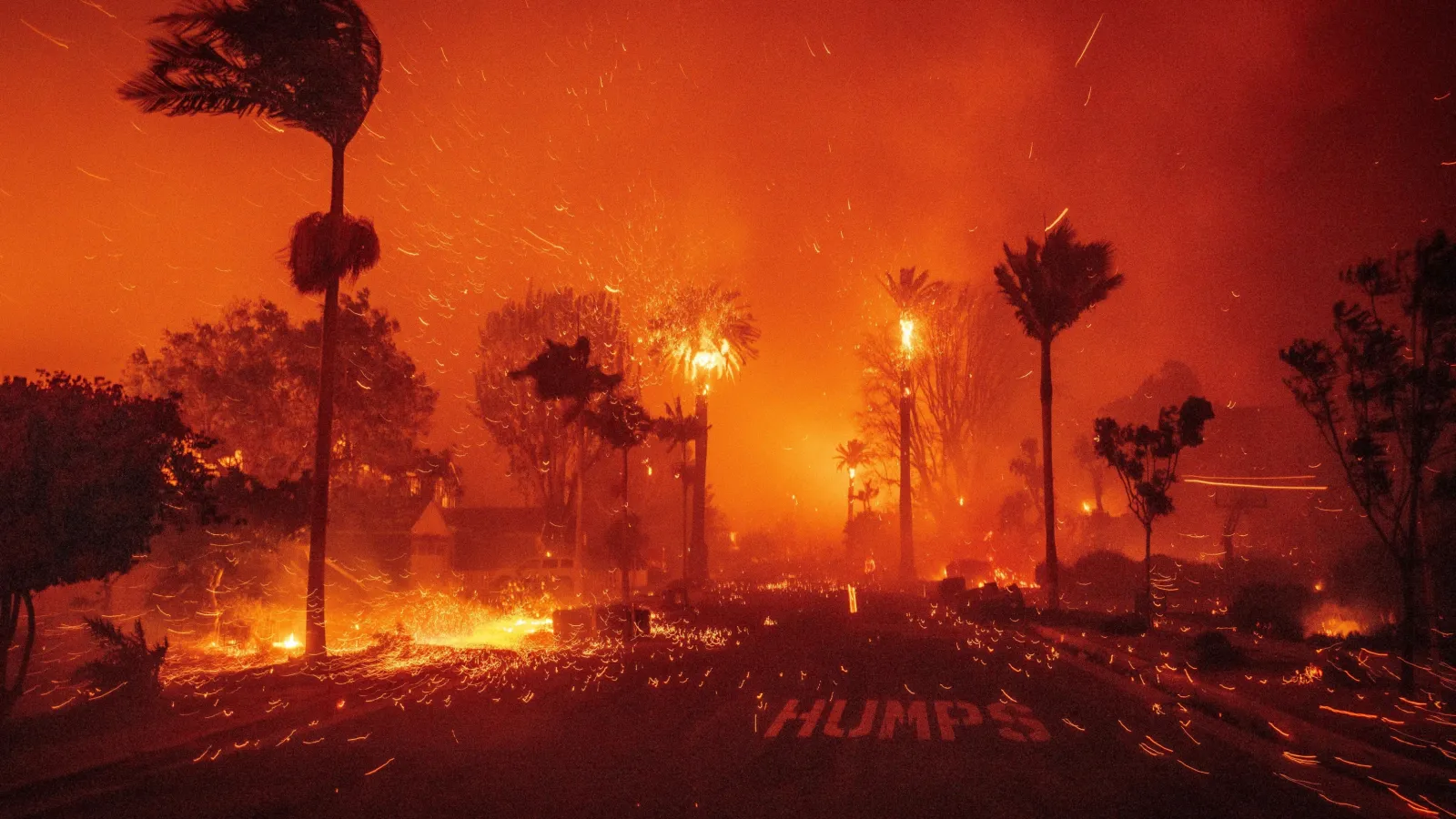
The tale of destruction began on January 6, 2024, when the Palisades fire ignited amidst Red Flag warnings for severe wildfire danger. Southern California was reeling from the notorious Santa Ana winds, which unleashed gusts equivalent to 145 kilometers per hour. With vegetation parched from months of drought, the landscape was a tinderbox just waiting for a spark. Reports of the initial blaze started trickling in just before 10:30 a.m. from LA’s upscale Pacific Palisades neighborhood. Within mere minutes, the small wildfire escalated rapidly, showcasing just how quickly disaster can unfold.
Toll on Human Life and Community
As the fires spread, evacuations were ordered, and roads quickly became jammed with residents fleeing the encroaching flames. The human cost was heartbreaking: 19 lives were claimed in the Eaton Fire and 12 in the Palisades Fire. Such tragic losses underscore the catastrophic potential of wildfires in a region increasingly vulnerable to the effects of climate change and extreme weather.
Extent of the Destruction
By the time the flames were finally subdued, the combined infernos had engulfed a staggering area of land—equivalent to 155 square kilometers, an area roughly the size of San Francisco. In total, 9,418 structures were destroyed in Altadena, while another 6,837—including homes and other buildings—were lost in Pacific Palisades and nearby Malibu. The sheer scale of the devastation is a chilling reminder of nature’s ferocity.
The Challenges of Rebuilding
Despite the overwhelming destruction, the path to recovery is beginning, albeit slowly. As of the latest reports, only a handful of homes have been rebuilt: primarily in Altadena, with just a couple in Pacific Palisades and one in Pasadena. None have yet been completed in Malibu, where the scars of the fire are still fresh. As rebuilding efforts progress, hundreds more homes are in various stages of construction across the region, a testament to the resilience of communities stricken by disaster.
Charitable and Government Response
Support from the community has poured in, with charitable commitments totaling between $860 million and $970 million, as reported by a study from the Milken Institute. A significant chunk of that—$265 million—was raised through individual donations via GoFundMe campaigns in the months following the fires, reflecting the generosity and solidarity of the broader community. Additionally, California Governor Gavin Newsom requested federal disaster aid to support recovery efforts, but approval from the relevant federal authorities remains pending.
Legal Repercussions and Investigations
The fires have also ignited a flurry of legal activity. A 29-year-old man has been charged with sparking the Palisades Fire; he faces a maximum sentence but has pleaded not guilty. Meanwhile, the cause of the Eaton Fire remains under investigation, casting a shadow over the already complex recovery efforts.
A Lingering Reminder of Vulnerability
As this year marks the anniversary of the twin infernos, the lingering impact of these fires serves as a stark reminder of the vulnerability of communities in wildfire-prone areas. With climate change intensifying the frequency and severity of such natural disasters, addressing the underlying factors is imperative for the safety and resilience of the region’s residents.
In essence, the nature of wildfires has drastically evolved; the emphasis now lies not only on fire suppression but on community readiness, education, and a deeper understanding of the environmental factors driving these devastating events. With logistics being re-evaluated and new fire prevention strategies being implemented, the hope is to serve both as a tribute to those lost and a pledge to future generations.