

Discovering the La Brea Tar Pits and Museum: A Family Adventure in Los Angeles
Though Los Angeles boasts a myriad of museums, few can captivate the entire family for long periods. The La Brea Tar Pits and Museum stand out as a remarkable exception. Nestled in the heart of the city, this unique Ice Age fossil site combines entertainment with education, ensuring that kids will have so much fun that they won’t even realize how much they’re learning.
A Window to the Ice Age
La Brea Tar Pits, located in the Los Angeles Basin where the Los Angeles and Rio Hondo Rivers converge, was once submerged in water. Over countless millennia, seismic activity shaped the area, giving rise to a natural bowl that eventually diminished as the ocean floor rose. Consequently, this geological transformation set the stage for the extinction of numerous species, including the formidable dire wolves and saber-toothed cats. Their fossils now lay dormant, waiting to be discovered by future generations.
Excavations began in Rancho La Brea—a Mexican land grant—in the early 20th century following the discovery of animal bones. In 1924, a significant 23 acres were donated to the city of Los Angeles and transformed into Hancock Park. This park eventually evolved into the National Natural Landmark known as the George C. Page Museum of La Brea Discoveries. Today, the La Brea Tar Pits and Museum form a vital part of the Natural History Museums of Los Angeles County (NHMLAC), which houses the largest collection of natural history artifacts on the U.S. West Coast.
Explore La Brea Tar Pits and Museum
The sprawling 13-acre campus of La Brea Tar Pits and Museum features a plethora of exhibits that promise to amaze visitors. Inside the museum, you can encounter fossils of the iconic Columbian mammoth, ground sloths, saber-toothed cats, and dire wolves—walk right up to these colossal creatures!
A particular highlight is the Fossil Lab, where scientists diligently work on new discoveries. Visitors can peer through glass windows to witness the process of cleaning and examining fossils before they are displayed to the public. The museum also houses two theaters: the 3D Theater, showcasing the exciting film Titans of the Ice Age, and the Encounters Theater, featuring a live performance titled Ice Age Encounters where children are delighted by an accurately-sized saber-toothed cat puppet.
The Tar Pits: A Fossil Treasure Trove
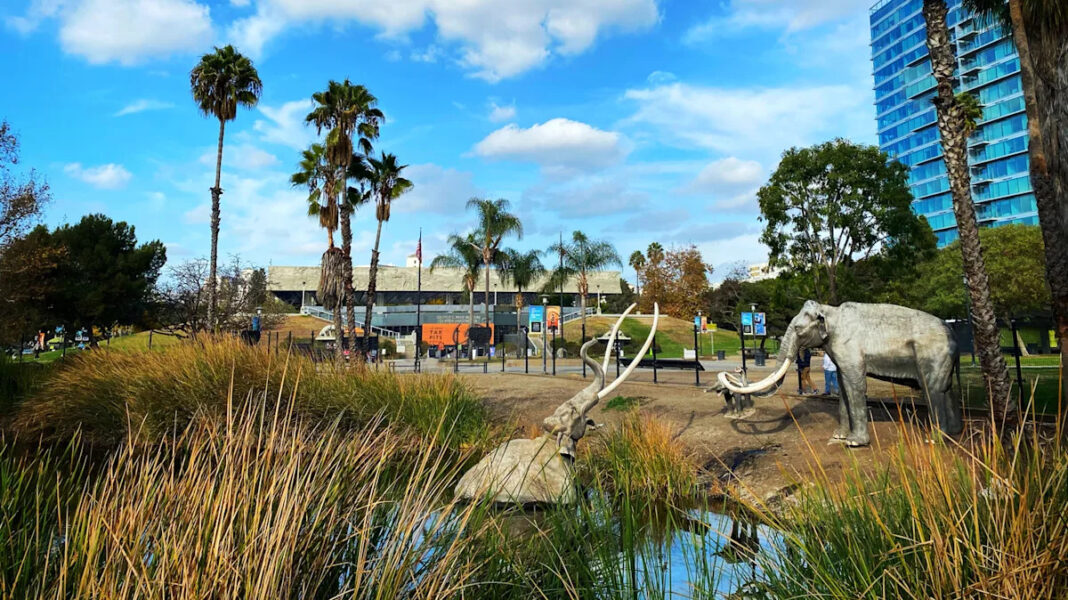
At the heart of the museum’s charm are the tar pits themselves. This thick, sticky asphalt is where animals became trapped and eventually fossilized. The Lake Pit, situated near the museum’s entrance, is adorned with dramatic sculptures of mammoths, offering an eye-catching welcome. Additional tar pits are scattered behind the lake, where an array of fossils—from massive creatures to tiny microfossils—have been unearthed over the last 125 years. Many of these sites remain active dig spots, revealing new treasures even today.
The significance of the tar pits extends beyond animal fossils; they also reveal plant fossils. Visitors can stroll the outside pathway and explore the Pleistocene Garden, showcasing various seeds, cones, and leaves from the Ice Age.
Planning Your Visit to the Museum
Tickets for La Brea Tar Pits and Museum are reasonably priced, making it accessible for families. Adults can enter for $18, while children pay only $7. For an additional fee of $8, visitors can enjoy both Titans of the Ice Age in the 3D Theater and the Ice Age Encounters production in the Encounters Theater. Those seeking a more immersive experience may opt for the La Brea Tar Pits’ Insider Tour, a guided experience led by an expert, which provides behind-the-scenes access to the tar pits and a close look at microfossils for $145 per adult and $125 per child. Notably, visitors can access the Lake Pit and the Pleistocene Garden at no charge, as Hancock Park is among the free things to do in Los Angeles.
Getting There
Reaching La Brea Tar Pits and Museum is convenient, as it’s located on Wilshire Boulevard, a major thoroughfare connecting Downtown Los Angeles to Santa Monica. Public transportation is also readily available, with the Metro Rapid 720 and Metro Local 20 buses stopping nearby. For those traveling from further afield, Los Angeles International Airport (LAX) is the closest airport, offering nonstop flights from cities across the globe.
Whether you’re planning a quick jaunt to Los Angeles or a more extended stay, the La Brea Tar Pits and Museum offer a delightful mix of education and entertainment that caters to visitors of all ages.