
Unraveling the Complex Ties Between El Salvador and MS-13: An Investigation into President Bukele’s Alleged Dealings
In recent years, El Salvador’s President Nayib Bukele has gained both notoriety and acclaim for his aggressive stance against crime, particularly in relation to the notorious MS-13 gang. However, a deeper investigation has unveiled troubling allegations that suggest a much murkier relationship between Bukele’s government and the very gang he has vowed to dismantle.
Investigation Impeded
Despite his rising star as a crime-fighter, U.S. officials have indicated that Bukele’s top aides have been actively obstructing efforts to extradite MS-13 leaders to the United States. Internal documents and testimonies reveal that these officials blocked extraditions, which would have potentially enabled U.S. agents to gather critical evidence regarding Bukele’s dealings with the gang. The implications of such actions raise fundamental questions about the president’s commitment to addressing gang violence.
Money Laundering Inquiry
Amidst the investigations, U.S. agents launched a separate inquiry to determine whether Bukele and other high-ranking officials were misappropriating U.S. Agency for International Development (USAID) funds, allegedly redirecting them to finance MS-13 members. This inquiry indicates a troubling intertwining of political power and organized crime, prompting further scrutiny of Bukele’s governance. Prosecutors prepared a list of individuals, prominently featuring Bukele, suspected of laundering money linked to illicit activities.
Threats to Salvadoran Allies
The fallout from these investigations extended beyond mere paperwork. Many Salvadoran law enforcement officials, who assisted U.S. agencies in gathering evidence against the gang, faced harassment and threats from Bukele’s government, forcing them to flee the country. Reports emerged of systematic intimidation tactics employed against these officials, showcasing the lengths to which Bukele’s administration would go to seal information and maintain control.
The Bukele-Trump Connection
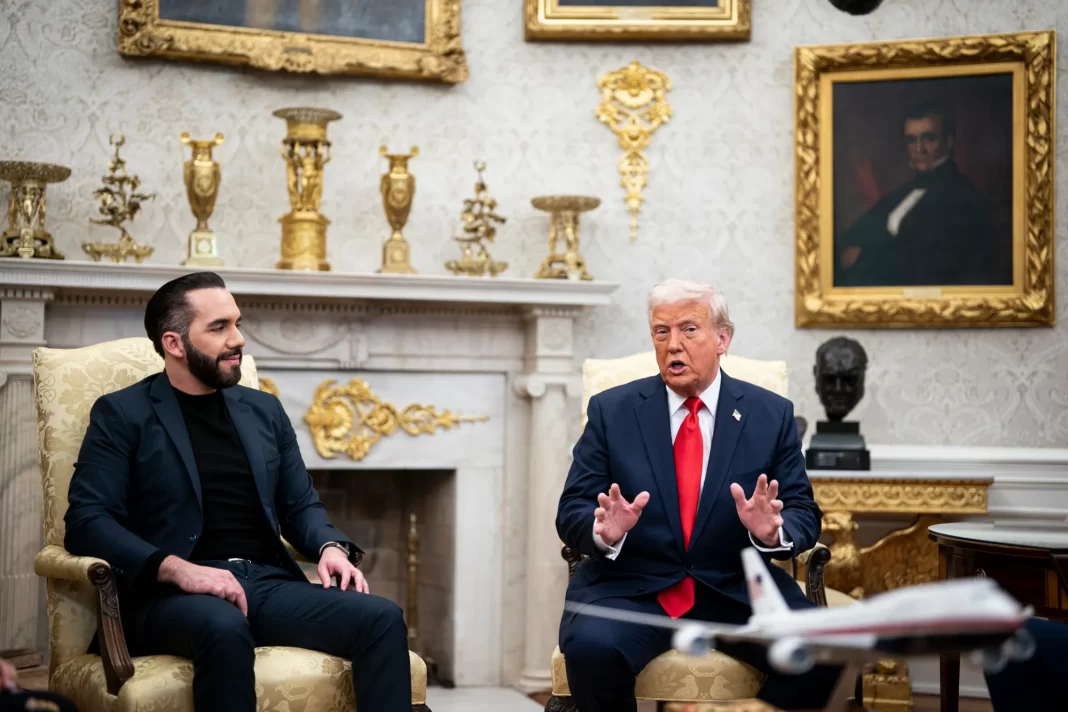
The relationship between Bukele and former President Donald Trump was pivotal in shaping U.S.-El Salvador relations. In April 2025, they negotiated a partnership that involved the deportation of Venezuelan immigrants and the return of accused MS-13 members to El Salvador. Trump, in that historic Oval Office meeting, praised Bukele as “one hell of a president,” thus establishing a bond that came to have significant implications for law enforcement actions in both nations. Yet as this partnership blossomed, it seemed to obstruct U.S. investigations into Bukele’s alleged collusion with the gang.
The Interface of Corruption and Law Enforcement
Though Bukele’s administration successfully implemented a crackdown on MS-13 that gained him substantial popularity, the tactics employed in this strategy merit scrutiny. Reports suggest that while thousands of lower-level gang members were incarcerated, Bukele’s regime was simultaneously negotiating secret deals with MS-13 leaders. These agreements allegedly ensured reduced homicide rates in exchange for political support, indicating a convoluted relationship rather than a straightforward fight against crime.
The Consequences of a Shift in Power
The political landscape in El Salvador shifted dramatically in 2021 when Bukele’s administration ousted the attorney general and several Supreme Court justices, effectively stifling any potential avenues for accountability regarding the MS-13 negotiations. This maneuver not only facilitated the rollback of extradition requests for gang leaders but also hampered U.S. efforts to collaborate effectively with Salvadoran authorities on these pressing issues.
Domestic and International Backlash
As allegations of corruption mounted, the Salvadoran government’s actions elicited international condemnation. Critics labeled Bukele’s moves as a “self-coup,” a term reflecting the drastic measures taken to fortify his rule amidst growing evidence of collusion with a terrorist organization. This backlash raised questions about the state of democracy in El Salvador, with critics asserting that Bukele prioritized political expediency over fundamental civil liberties.
A Compromised Investigation
The investigative partnership between U.S. agencies and Salvadoran officials, initially rooted in transparency and cooperation, was increasingly threatened by Bukele’s tactics to undermine these efforts. Extradition requests for multiple high-ranking gang members were systematically denied, and even in cases where approvals were granted, there were sudden reversals that appeared to be influenced by political pressures.
The Broader Implications
While Bukele portrays himself as a partner in the fight against crime, his administration’s alleged crimes call into question the authenticity of this partnership. The U.S. finds itself grappling with conflicting objectives: supporting a leader who assists in reducing violent crime while simultaneously investigating that same leader for corrupt dealings with the very gangs he claims to combat.
A New Wave of Violence
As El Salvador descended into chaos in early 2022, marked by a surge in gang-related violence, Bukele’s response came in the form of a nationwide crackdown, sparking widespread detentions. However, the question remains: with his perceived alignment with gang leadership, is this crackdown merely a façade to maintain political control rather than a genuine effort to restore order?
The Ongoing Challenge
As investigations continue, the challenges facing law enforcement agencies in both the U.S. and El Salvador seem daunting. The dual dilemma of managing domestic public safety while addressing the evolving international narcotics threat from MS-13 complicates a pathway towards effective resolution. Each twist and turn in this saga not only exposes the intricacies of El Salvador’s political landscape but also underscores the recurring battle against corruption that strangles the nation’s progress towards stability.
In light of these revelations, observers are left to ponder whether the U.S. can effectively support legitimate governance in El Salvador while navigating the complex and often dangerous interplay between political power and organized crime.