
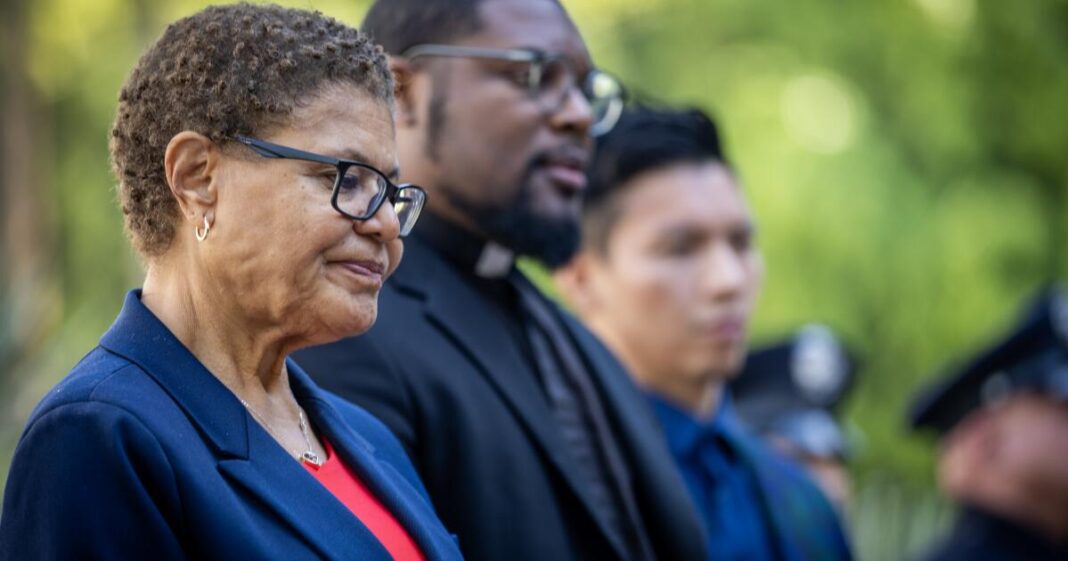
For nearly two months, Mayor Karen Bass has remained steadfast in denying any involvement in the alteration of an after-action report concerning the devastating Palisades fire, which ravaged Los Angeles. This report was crucial as it aimed to dissect the city’s and the Los Angeles Fire Department’s (LAFD) failures in combating a blaze that resulted in the loss of 12 lives and damaged over 6,000 structures.
However, behind closed doors, sources with knowledge of Bass’s office reveal a different story. They claim that after reviewing an early draft of the report, the mayor expressed concerns to then-interim Fire Chief Ronnie Villanueva. Bass allegedly feared that the report might expose the city to legal liabilities pertaining to its handling of the crisis, prompting her to request that critical findings about the LAFD’s actions be softened or removed entirely before public release.
These revelations surfaced following an investigation by The Times, which unearthed significant alterations to the report. It was published on October 8, 2025, indicating that the original findings were not merely critiqued but significantly diluted to shift focus away from the LAFD’s failings. Reports indicate that two insiders, who opted for anonymity, informed The Times that the mayor did indeed play a pivotal role in the report’s editing process.
One of Bass’s confidants expressed concern over the mayor’s dishonesty about her involvement, indicating that the decision to alter the report could have dire political ramifications. Both sources confirmed that original drafts were withheld until changes were made, asserting readiness to testify under oath to corroborate their claims if legal proceedings arise.
The depth of Bass’s involvement raises questions about the editorial process of the report. It’s not entirely clear if Villanueva or others made specific line edits at her direction or if they were acting on broader guidance. However, one source indicated that the changes reported by The Times were directly influenced by the mayor’s desires.
In response to these allegations, Bass’s office issued a statement categorically denying any changes made to the drafts. They claimed that the mayor had consistently voiced concerns about the LAFD’s response to the fire, and emphasized that she would have no reason to request changes that contradicted her position. Clara Karger, a spokesperson for the mayor, reiterated that the fire department authored and edited the report without extensive oversight from the mayor’s office.
Bass even went on record, stating that her only guidance to the department was regarding financial implications for the city’s budget, separating herself from the report’s intricate details and decisions.
This situation has not only affected public perception but has also stirred political implications. Rick Caruso, who lost to Bass in the 2022 mayoral election, indicated that the recent revelations about her role in the report’s alteration might lead him to reconsider running against her in the upcoming primaries.
Villanueva has refrained from commenting on the matter, and Fire Chief Jaime Moore acknowledged that some adjustments were made to the report. However, he expressed a lack of interest in identifying who was responsible for these changes, despite them being perceived by many as a concerted effort to protect top leadership.
Discussions around the handling of the report have also highlighted a larger pattern within the LAFD and its leadership. Fire Commission President Genethia Hudley Hayes, appointed by Bass, noticed modifications to the report and sought legal counsel due to her concerns. After reviewing both drafts, Hudley Hayes believed no material findings had been altered, but many others disagree, describing the edits as a “cover-up.”
Amidst these controversies, the aftermath of the Palisades fire remains pressing. Following the devastating incident, the original draft had critiqued the lack of pre-deployment of fire crews as not aligning with established policy. Yet, the final version rephrased key elements to suggest that the pre-deployment efforts exceeded existing standards, a significant shift in narrative.
Battalion Chief Kenneth Cook, the report’s author, has distanced himself from the altered version, labeling it “highly unprofessional” and inconsistent with established practices. This highlights not only a failure in emergency management but also raises ethical questions about accountability and transparency.
In recent developments, the LAFD has claimed to have implemented most recommandations outlined in the after-action report. These include establishing staffing protocols and training for chaotic weather conditions, demonstrating an ongoing commitment to learning from past mistakes.
As this situation unfolds, it continues to evoke reactions from the community and observers alike, illuminating the challenges in governance and public safety, as well as the delicate balance between accountability and political survival.