
Legal Showdown: National Guard Deployment and the Constitution
In recent days, the political landscape in California has dramatically shifted, primarily due to the ongoing legal battle involving Governor Gavin Newsom and former President Donald Trump over the deployment of National Guard troops in Los Angeles. This contentious issue has ignited diverse opinions, legal interpretations, and a wider debate about presidential powers.
The Context of the Battle
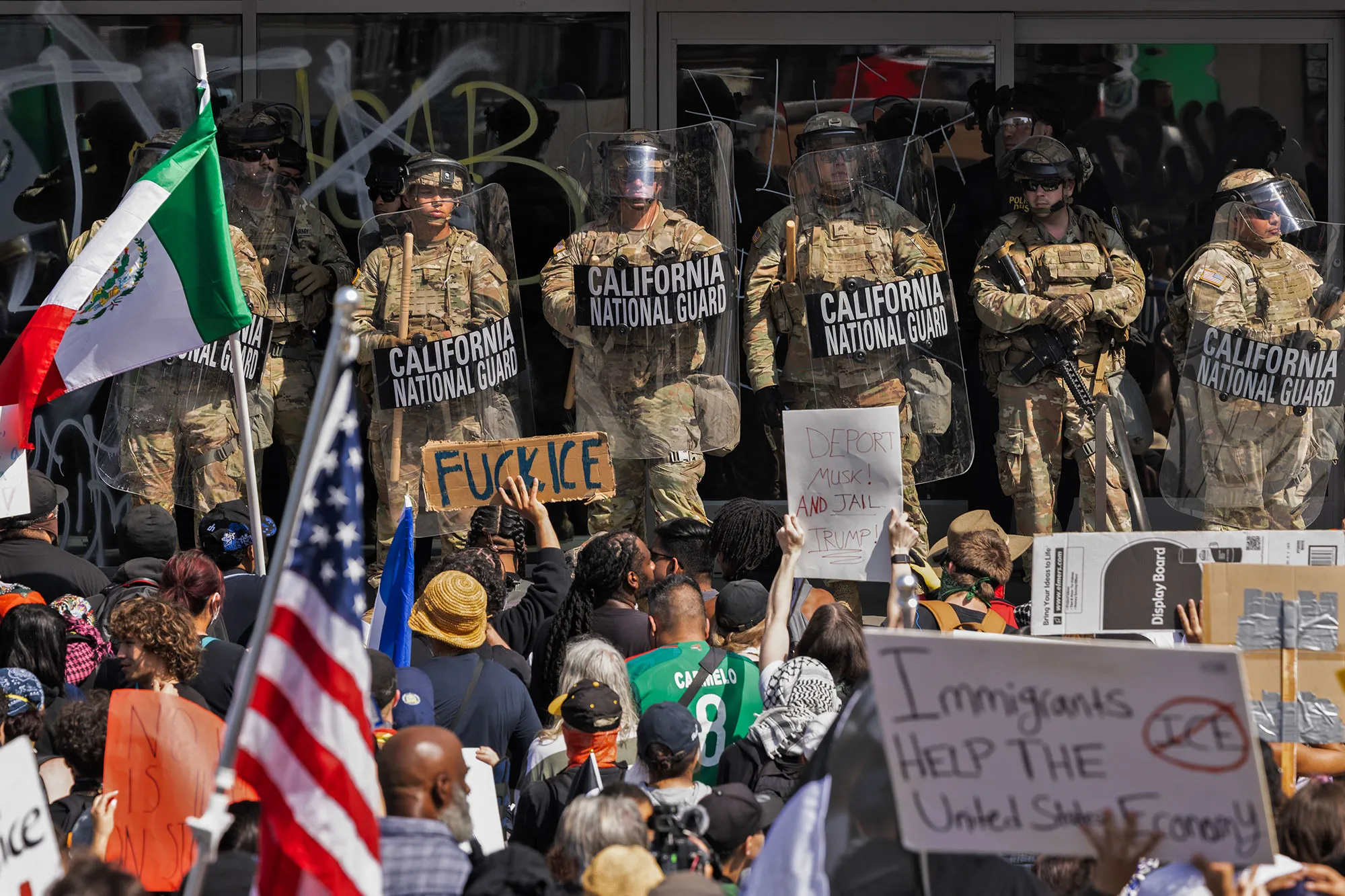
The situation escalated when President Trump ordered National Guard troops, alongside U.S. Marines, to Los Angeles in response to protests related to immigration policies. Governor Newsom’s legal team has declared Trump’s actions “terrifying,” arguing that the assertion of presidential authority in this case is both unprecedented and alarming.
A pivotal moment in this legal showdown occurred when the 9th Circuit Court of Appeals convened to hear the Trump administration’s arguments. At the heart of the discussion was the contentious claim that the president possesses the unilateral authority to deploy state National Guards without state consent, which raises critical questions about the separation of powers.
The Legal Arguments Presented
Department of Justice lawyers supporting Trump’s administration returned to court firmly arguing that the president’s decision cannot be challenged by the judiciary. They emphasized that the statute in question, a rarely invoked law from the early 20th century, empowers the president to act in situations perceived as a rebellion or invasion.
Judges on the panel appeared open to the administration’s expansive arguments regarding presidential authority, a significant departure from a lower court’s rejection of the claim. This shift indicates a serious deliberation on the implications of the president’s powers, particularly regarding domestic peacekeeping.
A Look at the Judicial Reactions
During the hearings, various judges probed the boundaries of presidential discretion, questioning whether a president can act without providing justifications when invoking this obscure law. Brett Shumate, representing the federal government, maintained that should the statute be deemed unreviewable, the courts have no standing to challenge it—a notion that has drawn criticism from legal experts.
Critics have emphasized that allowing such a broad interpretation of presidential authority could undermine the checks and balances embedded in the U.S. Constitution. Legal scholars, like Joseph Nunn of the Brennan Center for Justice, argue that such unchecked power poses a fundamental risk to the democratic tradition and civil rights.
The Stakes for California
Beyond the courtroom battles, the implications for California are substantial. An immediate concern revolves around whether Trump’s deployment of the National Guard should persist while the judicial review proceeds. Newsom’s administration insists this federalization diverts the National Guard’s attention from critical responsibilities, such as combating wildfires.
Moreover, the tension in relations between Trump and Newsom has heightened, with Newsom recently likening Trump’s approach to that of “failed dictators.” This reflects a broader partisan divide that fuels not only legal disputes but the emotions underpinning them.
Arguments Over Rebellion
At the crux of this legal conflict is the interpretation of whether the protests in Los Angeles constitute a rebellion. While Trump’s team insists on the necessity of federal troops due to alleged violence, Newsom’s lawyers argue local police forces have effectively managed the unrest, making federal military presence unnecessary and inflaming tensions further.
The debate is deeply political, yet it hinges on legal principles that will likely reverberate far beyond Los Angeles, given the potential for escalation to the U.S. Supreme Court. Such a scenario bears immense ramifications for both state and federal authority dynamics in the United States.
Presidential Authority and Historical Context
Historically, the law invoked by Trump is a remnant of early 20th-century legal frameworks. Prior instances of its use have been rare and mainly benign, such as President Nixon’s deployment during a postal strike. The unusual nature of its current application has prompted extensive legal scrutiny, especially concerning the implications it holds for future presidential authority in domestic affairs.
Some argue that if rules for such extraordinary powers aren’t strictly defined, future presidents might wield them with little oversight, potentially eroding public trust in government institutions and the military.
Community Sentiment and Legal Ramifications
Amidst the heated legal arguments, the sentiments of the local populace cannot be overlooked. Many in Los Angeles have actively protested against the militarization of civilian affairs, underscoring the tension between perceived state violence and the need for public safety. Testimonies from individuals on the ground reveal a community in distress, divided over how best to maintain order amidst growing civil unrest.
Legal battles like these have far-reaching consequences. Depending on how the appellate court rules, the case might travel to the Supreme Court, which would further define the scope and limitations of presidential powers, especially regarding military involvement in domestic issues.
The ongoing saga surrounding national security, state rights, and presidential authority is emblematic of a larger struggle within American democracy, one that taps deeply into the fabric of civil rights and government accountability. As these debates unfold, the importance of maintaining a careful balance between security measures and civil liberties takes center stage.