
An Upgrade for Grocery Delivery: Meet Coco 2
The bustling streets of Los Angeles are witnessing a technological transformation. Coco Robotics, a startup emerging from UCLA, is rolling out its enhanced delivery robot, the Coco 2. With over 1,000 robots already deployed across the nation, this next-generation bot promises to elevate food and grocery delivery in the City of Angels.
Features of the New Coco 2
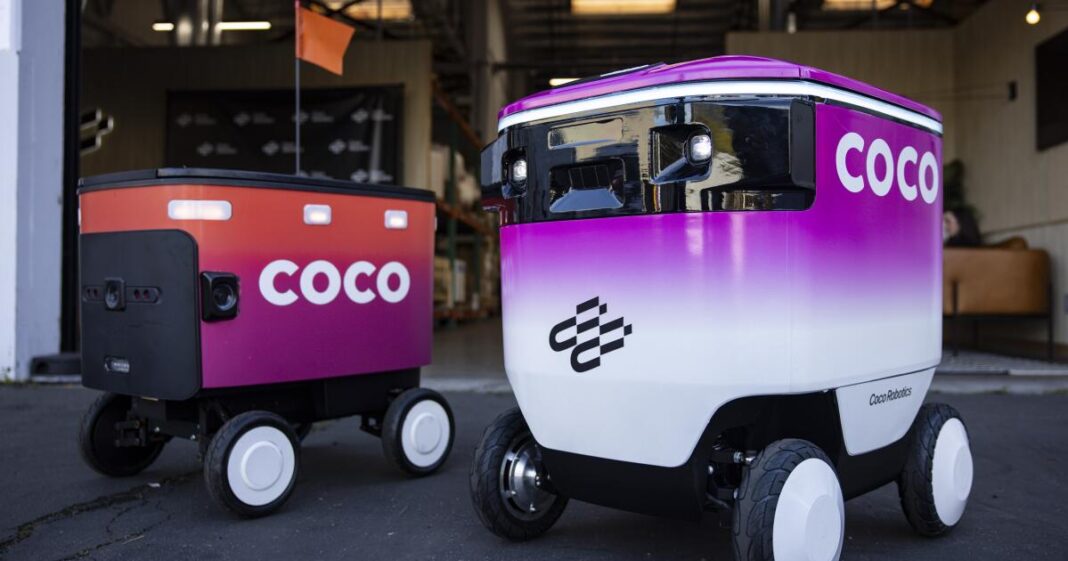
The Coco 2 isn’t just a catchy name; it’s a significant leap forward in autonomous delivery tech. The new bots boast upgraded cameras and a front-facing lidar system, a laser-based sensor common in self-driving vehicles. Designed with hardware from Nvidia, the robots can navigate extremely challenging conditions—enabling deliveries even when the weather isn’t cooperating.
Zach Rash, co-founder and CEO of Coco Robotics, emphasized the new robot’s resilience, noting that it is fully submersible for flooding scenarios and can even be equipped with special snow tires. This versatility ensures that Coco 2 can operate in environments deemed too dangerous for human drivers.
Real-World Testing
Coco 2’s capabilities were recently spotlighted when a previous model struggled through flooded streets in LA, becoming an accidental internet sensation. As onlookers cheered for the little robot, it highlighted the challenges these machines face in urban landscapes—the very challenges the upgraded model aims to overcome. Rash pointed out, “Those are the exact times where everyone wants to order.”
Rollout Plans and Expansion
Mass production of the Coco 2 is set to ramp up this summer, with a target of producing 1,000 bots per month. While many of the new robots will eventually operate in Europe and Asia, they are also bound for the busy streets of Los Angeles, working alongside older models. With around 300 Coco bots already navigating the neighborhoods of Santa Monica, Venice, West Hollywood, and more, Coco Robotics is planting its roots firmly in the community.
Community Engagement and Job Creation
Coco’s approach emphasizes community interaction; the robots are designed not just for efficiency, but to elicit affection from the public. Adorned with a sleek pink-and-white ombré design and friendly branding, the bots aim to be seen as helpful neighbors rather than mere machines. However, they still require human oversight to ensure a smooth operation. Issues like damaged sidewalks can halt a bot, creating new jobs for locals tasked with overseeing the robots.
Bridging Gaps in the Delivery Market
Coco’s delivery fleet is not just a convenience; it addresses a growing demand for delivery services. Many regions have reported a shortage of human drivers available for deliveries, leading businesses to seek auxiliary solutions like the Coco bots. Rash explained that their service does not aim to replace jobs but rather fits into existing gaps in the delivery market, offering a zero-emission, cost-effective solution that ultimately improves urban mobility.
Paving the Way for Future Urban Deliveries
With a pilot program already launched in cities like Chicago, Miami, and now Jersey City, Coco’s impact on urban logistics is palpable. The company’s partnership with DoorDash through DashMart allows for a variety of deliveries—from groceries to hot meals—streamlining logistics in the ever-demanding food service industry.
As Coco prepares to use bike lanes and road shoulders to enhance delivery speed, the future holds promising advancements in urban mobility. With the Coco 2, the startup is not just innovating delivery technology; they are actively shaping the future of how urban areas can function more efficiently and sustainably.