
The Delightful Arepa: A Culinary Staple from Colombia and Venezuela
In the bustling streets of Cartagena, Colombia, the air brims with vibrant sounds and dazzling colors. Cumbia musicians fill the atmosphere with the rhythmic beats of tambora drums, while women swirl past in vivid red, yellow, and blue ruffled dresses. Amid this lively scene, food vendors energetically push carts, their arepas sizzling tantalizingly on the grill. It was here, surrounded by music and color, that I first tasted an arepa—Colombia’s beloved dish made from corn.
The Essence of Arepas
Arepas are integral to the culinary identity of Colombia and Venezuela, centered around South America’s most cherished crop: corn. The process of making an arepa can be deceptively simple. Corn kernels are ground into flour, or pre-ground corn flour (often the iconic yellow bag from Venezuelan brand P.A.N.) is mixed with water and salt. This soft dough is then transformed into a pancake-like shape, either fried, grilled, or baked. The result? A blank canvas that invites endless customization, offering something for everyone.
A Culinary Nostalgia
For many, arepas evoke powerful memories. Yesika Baker, owner of Chamo’s Venezuelan Cuisine in Pasadena, reflects, “My memory of arepas is eating them morning, afternoon, and night. In Venezuela, the areperas are open 24/7.” This deep-seated tradition places arepas at the center of social and family gatherings, a staple that transcends mere sustenance.
Historical Roots of Arepas
The history of arepas is as rich as their flavor. Long before the territories of Colombia and Venezuela were delineated, Indigenous groups shared similar culinary practices centered around corn. When the Spanish colonizers arrived, they discovered Indigenous women crafting corn cakes resembling modern arepas, suggesting that this beloved dish has roots extending back thousands of years. Ocarina Castillo, an anthropology professor at the University of Venezuela, emphasizes the cultural significance and unifying heritage of this dish.
Colombian vs. Venezuelan Arepas
Today, variations of arepas abound in both Colombia and Venezuela. Colombian arepas tend to be simpler, often topped with cheese by street vendors, stuffed with eggs for a hearty breakfast, or served as a side dish with robust meals. Many argue that Colombian arepas have a thinner masa compared to their Venezuelan counterparts.
Santiago Restrepo, owner of Sus Arepas in East L.A., shares, “Growing up in Colombia, the arepa is like the Mexican tortilla. Everything comes with an arepita.” In contrast, Venezuelans utilize arepas more like pita bread, opting to stuff them with a variety of fillings. This difference in approach highlights the distinct cultural identities of each nation’s cuisine.
The Venezuelan Arepa “Rellena”
Among the Venezuelan variations, the arepa “rellena” or stuffed arepa stands out for its experimental flair. A favorite among Angelenos is the Reina Pepiada, which translates to “curvy queen.” Typically filled with a delightful mixture of shredded chicken, avocado, cilantro, and mayonnaise, this dish pays homage to Susana Duijm, the first Venezuelan to win the Miss World title in 1955.
Arepas in Daily Life
In both countries, it’s common to enjoy arepas at least once a day, particularly for breakfast. Yet, despite their massive popularity, arepas were conspicuously absent from Los Angeles’s culinary landscape for decades. Restrepo recounts, “When I first moved to L.A. [in the ‘80s], you couldn’t find arepas anywhere.” It wasn’t until recently that their visibility and popularity soared, particularly after 2020.
The Rise of Arepas in L.A.
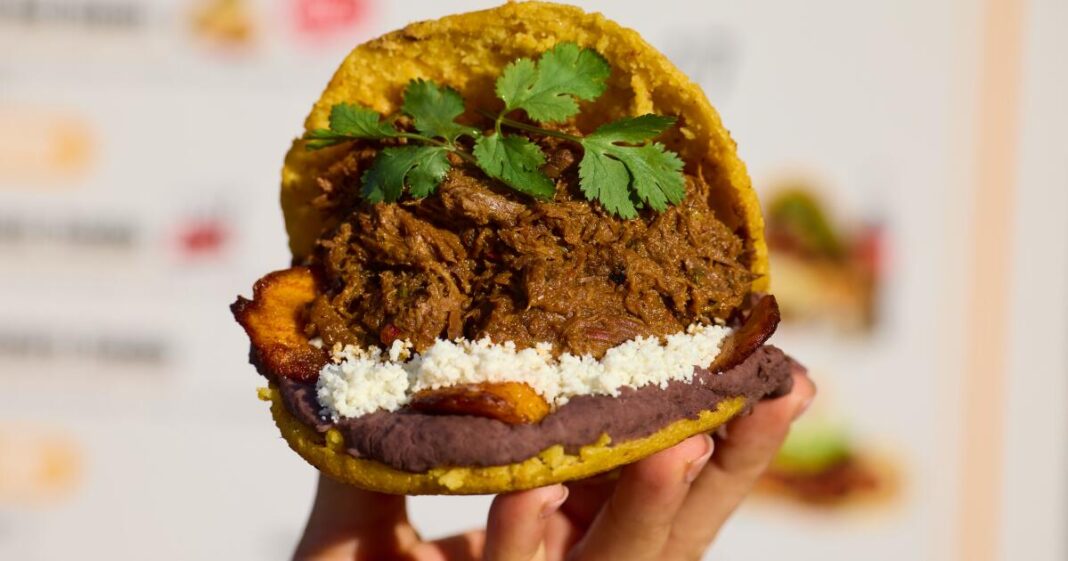
The resurgence of arepas can be largely attributed to their photogenic and appealing nature. Arepa rellenas often make an appearance on food blogs and social media feeds, piled high with ingredients like shredded beef, stewed beans, melted cheese, and plantains. “A good arepa rellena is all in the fillings,” says Mercedes Rojas, chef at the Arepa Stand, which frequents local farmers markets, delighting patrons with creative concoctions.
A Flourishing Arepa Scene
From arepas stuffed with mango and cheese to those inspired by diverse cultures, such as a Koreatown version filled with bulgogi, the arepa scene in L.A. is thriving and evolving. The blend of traditional flavors with creative twists offers an exciting exploration for both newcomers and seasoned fans.
The Arepa Debate
Amid this culinary exploration, one must tread carefully when discussing the origins of the arepa. As Baker aptly puts it, “It’s a long fight, amiga.” Whether one prefers the Colombian or Venezuelan style, the debate only adds to the rich tapestry of this cherished dish’s history. The arepa is not just a meal; it’s a symbol of culture, pride, and culinary innovation in Latin America.