

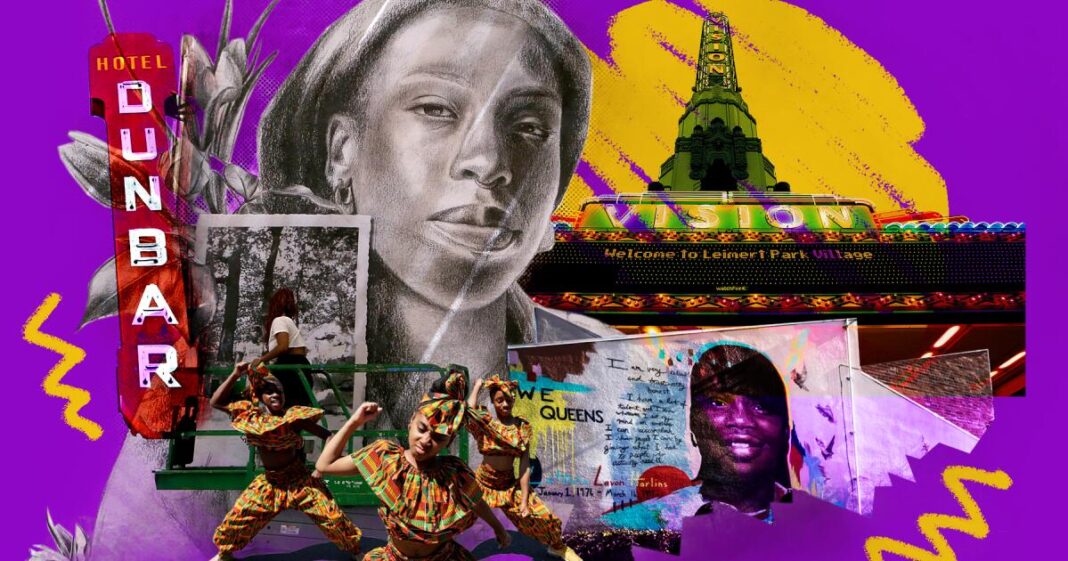
Celebrating Black Culture: The Historic South Los Angeles Black Cultural District
For over a century, South Los Angeles has been a vibrant hub of Black art, activism, and commerce. From the roaring jazz scene of the 1920s on Central Avenue to the contemporary renaissance driven by artists and entrepreneurs, the region is steeped in cultural significance. Recent initiatives, such as the development of Destination Crenshaw, aim to further rejuvenate this historic area.
A Landmark Recognition
The legacy of South Los Angeles has recently gained formal acknowledgment with the establishment of the Historic South Los Angeles Black Cultural District. This designation represents a critical move to preserve the area’s rich history and stimulate economic growth. Spearheaded by State Sen. Lola Smallwood-Cuevas (D-Los Angeles), the project received $5.5 million in state funding, and in December, the California Arts Council voted unanimously to recognize this cultural district.
This formal acknowledgment is significant; before this decision, no state designations recognized the Black community’s contributions, which deeply frustrated Smallwood-Cuevas. She emphasized the importance of acknowledging Black culture’s role in Los Angeles’s narrative and recognized that other cultural districts, such as Little Tokyo and Barrio Logan, already enjoyed such recognition.
The Legacy of Contribution
South LA’s contributions to American culture are manifold, encompassing art, business, and community events. Notable touchpoints include the Leimert Park and Central Avenue jazz festivals and cherished businesses like Dulan’s on Crenshaw and the Lula Washington Dance Theatre. These cultural touchstones have crafted a unique and enduring identity for the community that Smallwood-Cuevas is determined to protect.
Her partnership with LA Commons, a non-profit dedicated to community-arts programs, has strengthened this initiative. The collective goal is not just recognition but to cement a legacy that highlights South LA’s rich tapestry of creativity and resilience.
An Anti-Displacement Strategy
Beyond the surface of recognition, Smallwood-Cuevas views the cultural district designation as an “anti-displacement strategy.” With the demographic landscape of South LA evolving rapidly, preserving Black culture and community has become essential. Karen Mack, founder and executive director of LA Commons, echoed this sentiment, stating, “Black people have experienced quite a level of erasure in South L.A.” The historical significance of the district affirms that the community has always mattered in the broader Los Angeles narrative.
Geographic Scope
The Historic South L.A. Cultural District spans approximately 25 square miles. It is bordered by Adams Boulevard to the north, Manchester Boulevard to the south, Central Avenue to the east, and La Brea Avenue to the west. This area serves as a geographical reminder of the cultural and historical legacy that needs to be preserved.
Creating a Cultural Landmark
Following the district’s designation, Smallwood-Cuevas and LA Commons have turned their attention to a monumental task: creating a physical landmark that will symbolize the district’s significance. They are exploring ideas for a gateway, bridge, sculpture, or other focal points that will serve as the district’s entrance.
The planning process has involved dialogue with community leaders and organizations, such as the Black Planners of Los Angeles, resulting in a narrowed selection of eight potential locations—including Exposition Park, Central Avenue, and Leimert Park. This inclusive decision-making process aims to reflect the community’s voices in determining where this significant monument should be placed.
Historical Relevance of Potential Locations
As discussions continue regarding the monument’s site, the historical relevance of each proposed location is being carefully evaluated. Among the candidates, Central Avenue is particularly significant for its pivotal role in the jazz scene. Leimert Park, a celebrated cultural center, resonates with many community members as a symbol of artistic expression and unity. Meanwhile, Exposition Park holds an array of museums and educational institutions, making it a fitting site for a cultural monument aimed at promoting awareness and appreciation of Black history in Los Angeles.
Engaging the Community
To ensure the success of the district and its monument, organizers are actively engaging with the South LA community. A recent public poll demonstrated strong community interest, and participants cast their votes on potential sites. The overwhelming response signifies a collective aspiration to honor the history and contributions of Black residents in the area, further galvanizing those involved in the initiative.
As the discussions progress and plans for the monument solidify, the Historic South Los Angeles Black Cultural District is poised to become an enduring symbol of pride and recognition for a community that has long shaped the cultural landscape of the region. Through this effort, South LA aims not only to preserve its history but to foster a future where its contributions are celebrated and honored.