
Exploring Loneliness Through Art: The Exhibition “Reservoir”
A Painful Intimacy
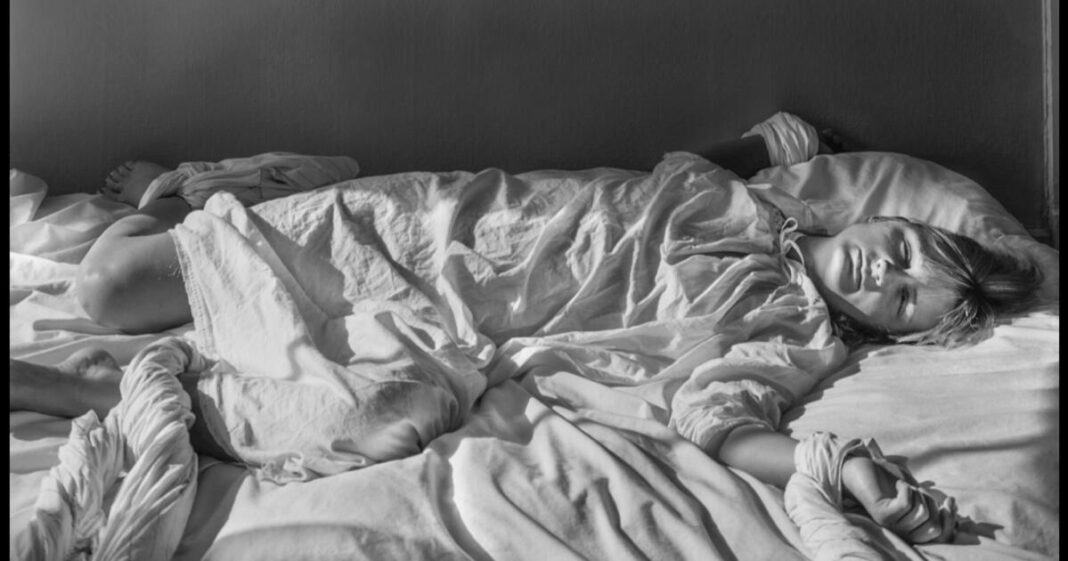
In a striking black-and-white photograph nearly five feet wide, we encounter the raw, vulnerable essence of loneliness. The image depicts a woman in her early 20s, lying on a hospital bed, her wrists and ankles restrained. The crispness of the photograph captures every detail — from the glimmer of her toenail polish to the fine hairs on her thigh. Yet, the most haunting element is the loneliness etched across her face.
This intimate self-portrait is the work of Lisa McCord, an artist who openly shares her experiences with mental health. “I was 20 or 21 then. I’d had a psychotic episode and was taken to a public hospital in Massachusetts,” she recounts. The stigma she faced in the 1970s for being hospitalized fostered a painful sense of isolation. “I’d tell people in school, I’d been in a psychiatric hospital, and no one wanted to hang out with me — it was a very lonely time.”
“Reservoir: Photography, Loneliness and Well-Being”
McCord’s poignant photograph is part of a broader exhibition at the Los Angeles Center of Photography (LACP) called “Reservoir: Photography, Loneliness and Well-Being.” The exhibition addresses the epidemic of loneliness, a concern elevated by the global pandemic, and involves the works of over 40 diverse artists. Curator Rotem Rozental aims to amplify societal issues through art, believing photography uniquely unites individuals around shared vulnerabilities.
“Art reflects the world we live in,” Rozental explains, emphasizing photography’s capacity to connect people through their feelings. The exhibition serves as a reminder of the deep currents of loneliness that many are currently navigating.
A Growing Public Health Crisis
Chronic loneliness is increasingly recognized as a public health crisis. Dr. Jeremy Nobel from the Harvard T.H. Chan School of Public Health notes that recent studies indicate approximately 50% of Americans often feel lonely. The ramifications of loneliness extend beyond emotional well-being, raising health risks significantly — including a 30% increase in early mortality and a 40% rise in dementia risk.
“It’s essential to distinguish between being alone and being lonely,” Nobel states. He explains that solitude can foster emotional growth, while loneliness is the subjective experience of lacking social connections. You can be surrounded by people and still feel profoundly alone.
The Role of Creativity in Healing
The exhibition “Reservoir” collaborates with Nobel and the Foundation for Art & Healing, which explores how creative expression fosters healing. Estudos reveal that creative activities can change our brain chemistry, lowering stress levels and enhancing overall mood, which in turn can facilitate social engagement.
Rozental and her team engaged in in-depth discussions with artists, therapists, and scholars to delve into themes of loneliness. Each participating artist responded to specific themes, such as aging and immigration, creating a vibrant dialogue within the exhibition.
Diverse Artistic Responses
Among various works included in the exhibition, Diane Meyer’s installation stands as a particularly moving example. She sourced around 100 old black-and-white photographs, meticulously hand-painting them to block out most subjects while leaving select figures visible. This technique creates a haunting effect — the floating figures in clouds or snow evoke a profound sense of disconnection.
In stark contrast, Jacque Rupp’s sleek multimedia installation engages with technology and the societal perception of aging women. By generating a grid of vacuous, morphing female faces using AI, Rupp examines how societal narratives often render aging women invisible, prompting viewers to reflect on perceptions of beauty and worth.
Further adding to the conversation, Julia Buteux’s installation features transparent fabric panels that evoke a sense of absence. Eliminating subjects from social media images, she invites viewers to contemplate the disconnect inherent in digital interactions.
Interactivity and Audience Engagement
In addition to static works, McCord’s interactive installation features a “visual diary” — a flip-through collection of photographs complemented by handwritten diary entries documenting her life from 1977 to 2021. Visitors can listen to snippets from her diary via headphones, making the experience immersive and profoundly personal.
The exhibition also plans to include creative workshops, aimed at utilizing art as a means to foster community and connection, broadening the impact of the messages conveyed.
Looking to the Future
Scheduled to close on March 14, “Reservoir” is set to travel internationally, bringing its vital conversations about loneliness to Chile, South Africa, and Japan. Rozental envisions this exhibition as a replicable model for community arts organizations worldwide, utilizing photography as a conduit for connection and healing.
“Photography is a language,” she asserts, a medium that “allows us to see ourselves in others.” In creating a space where visitors can view their experiences reflected on the walls, the exhibition holds the hope of alleviating the burden of loneliness, reminding individuals they are not alone in their struggles.