

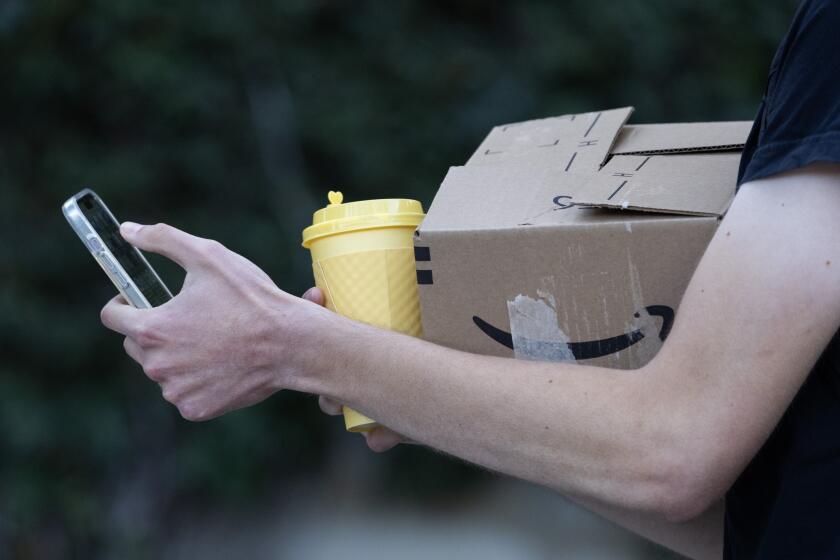

A student checks in with his phone at Harvard-Westlake School in Studio City. (Myung J. Chun / Los Angeles Times)
As we step into the year 2026, the movement towards an “analog lifestyle” has gained notable traction, with influencers and social media users alike advocating for a reduction in digital connectivity. This growing trend offers individuals a refreshing escape from the omnipresent grasp of screens and smart devices, promoting a reconnection with the tangible aspects of life.
Selly Tan, a California-based influencer, passionately expressed a collective yearning for authenticity, advocating for practices such as printing photos, diving into books, and rediscovering hobbies that don’t rely on Wi-Fi. Following suit, Rosie Okatcha from the U.K. heralded 2026 as “The Age of Analog,” encouraging her audience to trade in music streaming for vintage iPods and vinyl records while fostering creativity through crafting.
In Germany, Sanchi Oswal echoed similar sentiments, sharing her thoughts on how embracing an analog lifestyle can serve to decrease one’s “exposure and reliance on digital stimuli.” For those who have matured in a world heavily defined by technology, the battle to forge a healthier relationship with devices presents both a challenge and an opportunity.
Lillie Beacope, a senior at USC, illustrated the struggle many face: “From noon to 5 p.m., I’m locking eyes with screens everywhere, then continue scrolling through my phone at home.” This commentary encapsulates a pervasive sentiment among digital natives who wrestle with finding moments of genuine respite from constant connectivity.
Statistics underline the complications of this digital era. According to Pew Research Center data from 2025, a staggering 91% of U.S. adults own a smartphone, a significant increase from 35% in 2011. This reliance has paved the way for the “analog lifestyle” to emerge as a counterbalance to ever-increasing digital saturation, inviting people to actively engage in activities that restore focus and tranquility.
Why Now?
Although smartphone dependence has been a growing concern for years, its ubiquity accelerated dramatically during the COVID-19 pandemic. “People were upset, depressed, and scared,” reflects Karen North, a professor at USC. In those trying times, smartphones became lifelines, providing connections and entertainment during lockdowns.
As the pandemic has receded and life shifts back to a more traditional pace, many individuals have started to recognize their compulsive interactions with their devices. Dr. North describes this compulsive behavior as akin to a nervous habit, likening it to nail-biting. The smartphone, rather than simply a useful tool, can morph into an addictive distraction that makes it hard to focus on meaningful activities.
This self-awareness is leading to a re-examination of lifestyle choices, with experts like Dr. Anna Lembke highlighting the hidden emotional costs associated with excessive digital engagement. “People are less happy now than they were 15 to 20 years ago,” she states, drawing attention to a troubling correlation between heavy digital use and a mental health crisis characterized by rising rates of anxiety, depression, and stress.
The journey towards an analog lifestyle isn’t novel; it mirrors past attempts to disconnect from the digital sphere. As early as 2010, Mintel, a market research agency, predicted an impending retreat from digital devices, pinpointing a need for significant breaks from the all-consuming connectivity of modern life. Yet, the ever-looming fear of missing out (FOMO) continues to cloud this pursuit, as individuals weigh the benefits of disconnection against the pressure to remain responsive in a hyper-connected world.
Differentiating the ‘Analog Lifestyle’ Trend
The current analog trend stands apart from previous attempts because it emphasizes a return to simple, enriching activities that often serve as substitutes for screen time. Whether it’s crafting, reading, or listening to music on vintage devices, participants are seeking holistic ways to unwind that don’t involve hashtags or notifications.
This movement is fundamentally about striking a balance—between productivity and pleasure, attentiveness and distraction. Natalia Khodayari, a postdoctoral researcher, highlights the urgency of regaining control over our time and mental space, pointing out that the all-encompassing nature of modern life makes it increasingly difficult to remain present.
Research supports this shifting paradigm; a 2018 study in the National Library of Medicine revealed that participants checked their smartphones over 60 times a day, losing substantial time in the process. Consequently, younger generations are gravitating toward the analog lifestyle as a means of mindfulness and intentionality in their daily routines.
Ways to Reduce Digital Connectivity
Embracing an analog lifestyle isn’t a one-size-fits-all endeavor. Instead, it involves assessing individual habits and making gradual changes to reclaim time and focus. However, many of these suggestions are indeed conveyed through the very digital channels people are trying to distance themselves from.
Popular trends include creating an “analog bag,” which contains craft supplies or opting for refurbished iPods as a nod to retro sensibilities. This renewed interest has significantly driven up searches for iPods on platforms like eBay, with dramatic increases in their resale values observed throughout 2025.
In the crafting world, Market Research Future projects continued growth in craft supplies as an avenue for self-expression and creativity. In this context, participants need not invest heavily to be part of the movement; incremental changes can yield long-term benefits.
Khodayari suggests beginning with manageable adjustments such as:
- Placing your phone out of sight while engaging in other tasks—perhaps locking it away in a drawer.
- Removing distracting apps from your home screen or deleting them entirely for a clearer mental space.
- Muting or disabling unnecessary notifications to reduce the allure of constant checking.
- Exchanging time spent on social media for other enriching activities—like a walk, crafting, reading, or cooking.
As we navigate this digital landscape in 2026, the analog lifestyle serves as a reminder that you can reshape your interaction with technology, transforming it from a source of stress into a tool for fulfillment.