

Protests and Public Safety: Navigating Civil Unrest in Modern America
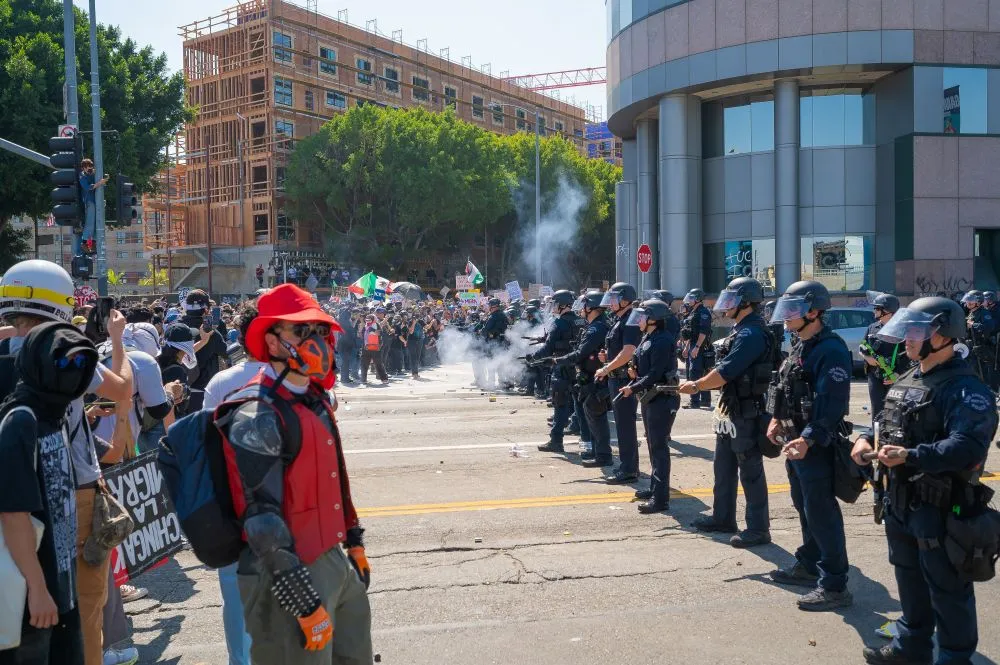
Recent immigration sweeps in Southern California ignited a wave of protests across Los Angeles, bringing both passionate voices and significant challenges to public safety. Activists expressed their views in various ways, and while many demonstrations remained peaceful, others erupted into moments of intense tension. This dynamic prompted the city’s first responders to remain on high alert, illustrating the complex relationship between civil unrest and emergency services.
Tensions Rise in the City of Angels
At the peak of the demonstrations, protesters blocked access to major freeways and even set vehicles ablaze. In response to the escalating situation, Los Angeles Mayor Karen Bass implemented a temporary curfew, showcasing the city’s efforts to balance public safety and the right to protest. This dynamic underscores a troubling trend—what unfolded in California could easily happen anywhere in the United States or Canada, as civil unrest has become a recurring theme in recent years.
First Responders: Bracing for the Unexpected
Firefighters, paramedics, and emergency medical professionals are increasingly finding themselves in unpredictable environments during these protests. The stakes are higher than ever, with emotionally charged crowds and rapidly changing threats. This reality necessitates specialized response protocols developed by fire and emergency medical services (EMS) agencies across North America.
For instance, during the recent Los Angeles protests, the city’s Emergency Operations Center (EOC) was activated to Level 2. This escalation altered response protocols to enhance the safety of firefighters. John Bagala, a state representative, noted that this meant coordination among fire, law enforcement, and other agencies while ensuring that responders could continue to address emergencies amid heightened tensions.
Tactical Preparedness: Ensuring Responder Safety
To manage potentially unsafe situations, Los Angeles County Fire Department officials have developed a strategy for deploying task force units in response to identified “hot zones.” These task force units may consist of fire trucks, engines, and ladder companies, scaled according to the needs of the situation.
According to Adam VanGerpen, a public information officer for the Los Angeles Fire Department, safety is always paramount. VanGerpen explained that it is crucial for firefighters to remain mission-focused and to wait for law enforcement to provide an escort into hazardous areas. This collaboration allows responders to quickly enter and exit these volatile situations, enhancing their safety.
The Dilemma of Responding to Fires
In some instances, it may even be safer for firefighters to allow certain fires to burn rather than risk entering a volatile environment. For example, during the protests, several self-driving electric vehicle taxis were set on fire. VanGerpen explained that responders would assess the risk; if the vehicles were near buildings and posed a fire risk, the firefighters would put them out with law enforcement present. This illustrates the difficult decision-making first responders often face during civil unrest.
Lessons from the Past: The Importance of Coordination
The recent protests in Los Angeles echo similar events witnessed in other cities like Minneapolis and Washington, D.C. After the killing of George Floyd and subsequent unrest, fire and EMS agencies in Minneapolis adapted their response strategies. Minneapolis Local 82 President Mark Lakosky noted that city officials emphasized a calm response and remained ready to activate their task force during similar incidents.
Responders have learned from these experiences the importance of real-time coordination with law enforcement. This partnership enables emergency units to stay informed about potential threats and the safest routes for responding to emergencies. Regular review and adjustment of their response protocols ensure that they can react effectively, even in the face of escalating danger.
Empowered to Act: A Unified Approach
Fire departments nationwide, including those in Washington, D.C., have adopted a task force model that pulls together emergency responders into a coordinated effort during major protests. Captain Ray Edwards, a leader within D.C. Fire and EMS, emphasized the importance of responding to incident intelligence and coordinating closely with law enforcement. This practice helps maintain a safe operating environment while also ensuring the safety of both the responders and the public.
When faced with large events, such as marches or civil unrest, D.C. firefighters are prepared for a variety of medical emergencies, from heat exhaustion to treating injuries. Still, they must be equally cautious of the potential for fires and property damage.
A Human Approach in Crisis Management
Throughout these tumultuous times, the emphasis on safety remains critical. Firefighters are continually trained to handle these complex scenarios, focusing on maintaining communication, situational awareness, and safety-first protocols. Each call to action demands that they adapt their responses while adhering to the established guidelines that govern their duties.
As communities grapple with civil unrest and the complexities that accompany it, the collaboration between first responders and law enforcement will remain central to managing public safety effectively. Each incident serves as a reminder of the ongoing challenges and the evolving landscape of public safety in a democratic society.