

Ulises Menchaca: Caught in the Crossfire
Ulises Menchaca idled in his pickup truck on a steep street in Silver Lake, late for work. The sun cast long shadows across the pavement, yet he remained stuck in a traffic jam that felt both endless and intrusive. In front of him, activists poured out of a tour bus, gathering at the historic Paramour Estate, setting the stage for a confrontation that spoke volumes about current issues in the culinary world and beyond.
Noma L.A.: The Launch of a Controversial Experience
Today marked the opening day of Noma L.A., an exclusive dinner series spearheaded by renowned Danish chef René Redzepi. For the next 16 weeks, Redzepi and his formidable 130-member team would craft multi-course meals at a staggering price point of $1,500 per seat. This scenario felt surreal to Menchaca, a seasoned landscaper, who remarked, “Imagine? I would have to work every day, all day, for three months to afford that. And if I had that money, why would I spend it on just one dinner?”
The Rising Tide of Dissent
The financial barrier is just one aspect of a broader discourse regarding Redzepi’s legacy. Recent allegations of workplace abuse—including unpaid internships, physical assaults, and threats—have clouded his accolades. This was accentuated by a recent article in The New York Times that unveiled a troubling narrative about his management style. Facing mounting pressure, Redzepi issued an insipid apology on Instagram, which did little to quell the rising tide of dissent.
L.A.’s Response: Protest and Activism
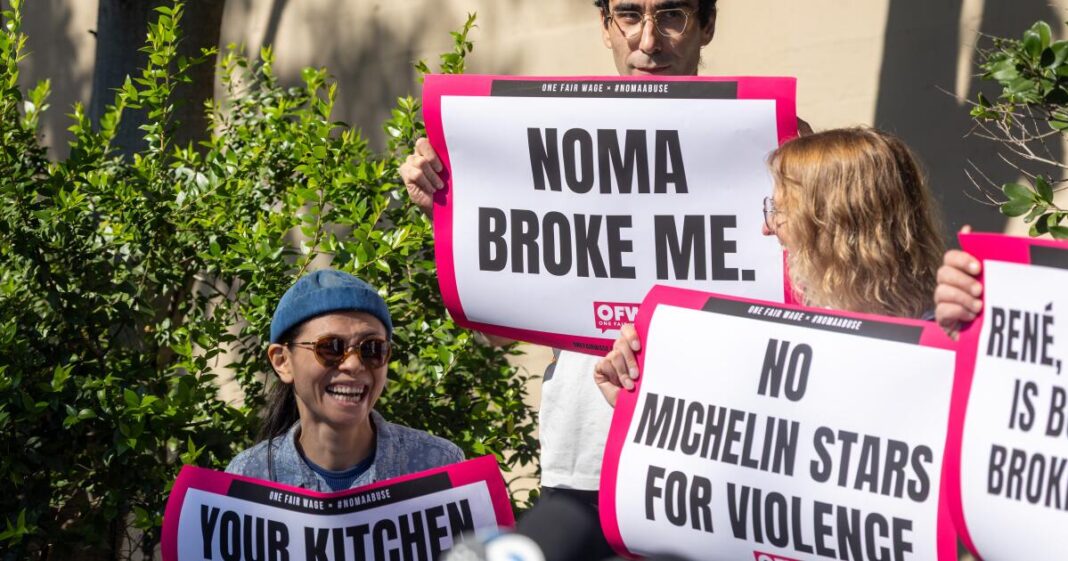
As activists arrived with signs proclaiming “Noma Broke Me” and “Your Kitchen is a Crime Scene,” they demanded reparations for those harmed by Redzepi’s actions. Jim Longeretta, waiting behind Menchaca in an SUV, voiced his disdain, declaring, “He’s an a———!” When asked if he would dine at Noma if someone else covered the cost, he flatly replied, “No way. Not with all the allegations right now.”
A Missed Opportunity for Redemption
L.A. thrives on reinvention and second chances, a sentiment that might have offered Redzepi a pathway to genuine contrition. However, instead of engaging with the grievances raised by protesters, security guards bore witness to the unfolding drama while former Noma head of fermentation, Jason Ignacio White, delivered a poignant letter critiquing Redzepi’s conduct. Despite attempts to engage, the intercom went unanswered, symbolizing a missed opportunity for dialogue.
The Culinary Dissonance
So why does the Neoma L.A. venture create such a stir? Perhaps it’s rooted in the hubris of a chef who once found reverence in culinary circles. When the pop-up was announced, it was met with enthusiasm, painting Redzepi as a prodigal son arriving to replenish a beleaguered food scene. Yet the realities of economic stratification and systemic inequalities in a city like Los Angeles make such a luxury dinner feel painfully out of touch.
Redzepi’s Culinary Hubris
As Redzepi prepared to showcase dinner menus that elevated ingredients and culinary philosophy, the question lingered: Did he consider the city’s history, culture, and local cuisine before positioning himself as an expert? His lavish establishment feels like an imposition on a community rich with its own culinary traditions—traumas, strengths, and a history that cannot be glossed over with flashy price tags and special events.
Reflection of a City in Conflict
In many ways, Menchaca’s experience encapsulates the broader narrative of Los Angeles—a city caught between aspirations and the stark realities of inequality. Many locals, like Menchaca and Rojas Ortega, quickly scoff at the idea of spending such sums on a single meal, especially in light of ongoing community struggles. And what’s more disturbing: are these scenes of opulence merely a distraction from the urgent issues affecting marginalized communities?
Voices from the Ground
As the protest continued outside Noma L.A., a diverse collection of voices emerged. Common sentiments of disbelief and frustration underscored the widening gap between haves and have-nots in a city dominated by extravagant consumption. “Does it at least go to charity?” Rojas Ortega questioned incredulously. The answer was a hard no.
Culinary Alternatives
Amid this brewing tension, many in Los Angeles prefer to find satisfaction in local gems. Reflecting on his own lunch, the author noted a stark contrast—$15 well spent at El Grullense, where locals shared laughs over carne asada burritos. It’s an everyday experience of culinary joy, deeply rooted in the community, untainted by systemic disrespect or exorbitant pricing.
A City Seeking Authenticity
As the lunchtime crowd at El Grullense contrasted sharply with the elite din of Noma L.A., one thing became clear: the heart of Los Angeles lies not in the high-priced pretensions of fine dining but in the authentic, shared experiences that connect its diverse communities. There’s power in the collective voices of the everyday eaters—stories, flavors, and shared dreams that remind us of what food truly represents: connection, culture, and community.
A Parting Note: The Need for Shift
As Redzepi serves $1,500 plates to his patrons, they should pause and ponder: what does this spectacle mean in a city riddled with contradictions? Looking beyond surface-level glam without engaging with the socio-economic context can blind even the most celebrated of chefs. Ultimately, it boils down to this: should the culinary world accommodate only the affluent, or can it celebrate the rich tapestry of stories and flavors with authenticity at its core?