

Los Angeles’ New Food Cart Initiative: A Double-Edged Sword?
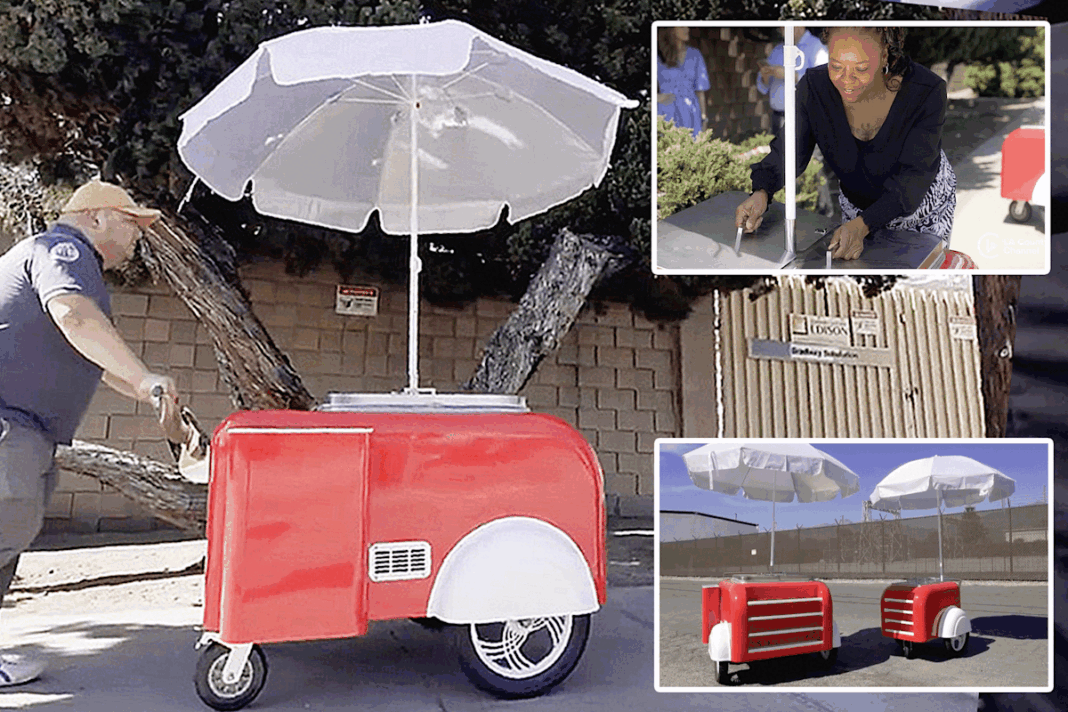
Los Angeles has rolled out an ambitious $2.8 million initiative aimed at providing nearly 300 free food carts to street vendors. Street vending, often seen as a hallmark of urban culinary culture, has encountered a wave of debate. While the program aims to uplift small businesses and ensure compliance with health standards, it has drawn criticisms, particularly from established restaurant owners who feel the landscape is becoming increasingly unfair.
Background of the Initiative
The launch of this food cart giveaway program by Los Angeles officials aims to assist street vendors in meeting new health and permitting requirements. Nearly 281 carts, compliant with California’s Compact Mobile Food Operations standards, will be distributed. This initiative aligns with the broader goal of integrating street vendors into the “legal economy,” promoting economic stability and growth, particularly for underserved communities.
The Voice of Experience: Andrew Gruel
Andrew Gruel, a celebrated chef with a robust background in the food industry, has openly critiqued the initiative. He argues that the city’s regulations create a significant disparity between brick-and-mortar restaurants and street food vendors. Gruel, who rose to prominence with his brand Slapfish—starting from a single food truck to over 55 locations globally—says that traditional establishments face stringent health and wage laws, while vendors often operate outside these frameworks.
He emphasizes, “If I were a brick-and-mortar business, I’d be crushed under the weight of regulations.” Gruel’s frustration reflects a growing sentiment among restaurateurs, who feel they are shouldering an unfair burden while street vendors receive what he sees as a free pass.
Unequal Playing Fields
Gruel’s concerns extend into the financial implications of the initiative. He points out that while food vendors may receive state subsidies for various costs, traditional restaurants are left to navigate a complex and often punitive regulatory landscape. “If you support street vendors financially, then offer the same support to brick-and-mortar businesses,” he insists.
Further exacerbating the issue, he highlights instances where food vendors operate as cash-only businesses, circumventing sales tax and other obligations that traditional restaurants are bound to follow. This raises questions about equity in the restaurant industry and whether the city is inadvertently fostering an uneven competition landscape.
A Community-Centric Approach
Supporters of the food cart initiative, including Supervisor Hilda Solis, assert that it’s time to recognize the vital economic and cultural role of street vendors in Los Angeles. Solis champions the initiative as a way to support entrepreneurial growth and boost economic stability for small operators in the area.
The plan is set to waive certain fees for vendors. For instance, the typical $604 sidewalk vending registration fee will be waived for the first two years, easing the burden on new vendors and encouraging participation. Additionally, the program offers a 75% subsidy for health permits and grants up to $5,000 for startup costs—further attempts to smooth the transition into legitimacy for street vendors.
The Road Ahead: Challenges Await
Despite the clear intent behind the initiative, the execution could prove to be a challenge. Officials are anticipating that the lengthy permitting process may delay the distribution of carts, potentially replicating difficulties experienced in Long Beach, where a similar initiative faltered due to an inadequate number of applications completing the required regulatory steps.
With the announcement of the Los Angeles program, some wonder if the structural barriers will hinder its long-term success. Many participants may find themselves entangled in red tape, which could mirror the fate of Long Beach’s abandoned cart initiative where only a fraction of those interested progressed through the complex application procedures.
Gruel’s Final Thoughts
Gruel, while a proponent of reducing red tape for food vendors, advocates for equitable treatment across the board. He states, “I’m not against street vendors; I’m a pro-deregulation guy. I just want to assure that every business—big and small—has a fair shot.”
As Los Angeles navigates this new chapter in its culinary landscape, the balance between aiding street vendors and supporting traditional restaurants will require careful consideration and equitable policy-making. The implications of this initiative extend far beyond food carts; they touch upon the very principles of fairness and opportunity that underpin a thriving, diverse business community.