

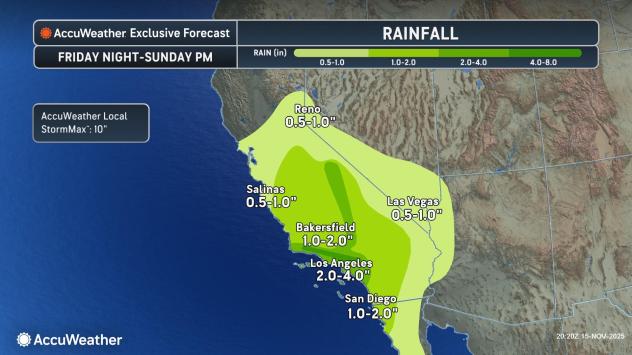
Southern California and parts of the Southwest are bracing for another round of heavy rain this weekend as a powerful storm system moves into the region. Meteorologists at AccuWeather are cautioning that torrential rain could result in flash flooding, mudslides, and washed-out roads, creating perilous travel conditions for locals and visitors alike.
The heaviest rainfall is expected to affect the southern half of California, particularly metropolitan areas such as Los Angeles, before spreading inland to the deserts of Nevada, southeastern California, and Arizona. Meanwhile, those in the central parts of the state may experience a brief respite from the rain over the weekend before more showers return.
Current conditions have already prompted evacuation orders in regions around burn scars from recent wildfires, notably the Eaton Fire and Palisades Fire. These areas are particularly vulnerable to rapid runoff, which can elevate the risk of flash floods and debris flows in a matter of minutes.
By the start of the weekend, reports of mudslides were already coming in from Santa Barbara County. As the storm intensifies, roads could become impassable due to washing away or sediment accumulation, further complicating travel and recovery efforts for those affected.

AccuWeather.com
The anticipated rainfall is poised to be significant—potentially three to six times higher than the historical average for November in the region. Some experts predict that this storm alone could contribute to one-quarter to one-third of California’s annual rainfall totals. Labelled by some media as an “atmospheric river,” meteorologists have utilized extensive data analysis to substantiate this claim.
This moisture stream may not be categorized as a classic high-end atmospheric river, yet it still possesses the capabilities to unleash destructive rainfall and widespread flooding across Southern California. The threat of torrential rain extends beyond Los Angeles, affecting major cities such as San Diego, Santa Barbara, San Bernardino, and Palm Springs. Even remote areas like Death Valley are not immune, with concerns about washouts on vital roads crossing the national park.

Enhanced rain and snow due to Atmospheric Rivers in the western U.S.
Forecasts indicate that thunderstorms are also a possibility, with some storms potentially escalating to severe conditions featuring damaging winds or hail. Isolated incidents of waterspouts or brief tornadoes could emerge from the strongest storm cells.
Motorists are advised to exercise extreme caution when navigating roads during this period. Floodwaters can quickly rise and mask hazards, making it crucial to avoid flooded roadways, as vehicles can stall or worse, become swept away. Road surfaces may already be weakened or washed out from past storms, posing additional risks.
Colder air is expected to sweep into the region, bringing potential snowfall to higher elevations in Southern and Central California. Areas in the Sierra Nevada could see several inches of accumulation, with some ridges and peaks blanketed in a couple of feet of snow. However, snow levels will remain high enough to keep pass elevations clear of significant snow.
If conditions align favorably, this November could become one of the wettest on record for the region, with upcoming storms anticipated to follow closely behind this weekend’s system. Another storm is forecast for Sunday night into Monday, though it is expected to bring less intense and more sporadic rainfall.

AccuWeather.com
As the storm helps alleviate drought conditions throughout the Southwest, significant rainfall in regions like the Colorado River basin is welcome news. Nonetheless, multiple storms will be necessary to make a substantial impact on dwindling water levels at critical reservoirs like Lake Mead and Lake Powell.
For now, California’s reservoirs are reportedly at or above normal capacity for mid-November. The influx of rain will also serve to wet the vegetation, thereby reducing the short-term potential for wildfires across the state.
Stay alert with the latest weather updates and alerts by accessing the AccuWeather app. For those looking for enhanced safety features, consider unlocking premium alerts for severe weather to remain informed.