

Behind the Kitchen Door: The Dark Side of Culinary Stardom
The Burden of Perfection
The world of high-end restaurants is often romanticized, but beneath the glittering facade lies immense pressure. The expectation to serve perfect meals night after night is staggering, and the quest for culinary excellence can lead to toxic environments. For some, this relentless pursuit manifests as abusive behavior, a burden carried by both restaurant owners and their staff.
The Case of Rene Redzepi
One of the most notable figures in contemporary gastronomy is Rene Redzepi, the chef and owner of Noma, a restaurant that has redefined Nordic cuisine since its inception in Copenhagen over two decades ago. Known for its innovative approach to food, Noma has garnered international acclaim but has recently found itself under scrutiny. Allegations of abusive behavior towards employees have surfaced, bringing the restaurant’s storied reputation into question.
A Disturbing Investigation
A New York Times investigation, triggered by alarming Instagram posts from former employees, unveiled a troubling pattern of behavior attributed to Redzepi. The report detailed instances where he allegedly “hit, jabbed, and shoved” employees over minor errors. In the kitchen’s high-pressure environment, he resorted to intimidation tactics, threatening staff with blacklisting and deportation for mistakes, transforming the culinary haven into a labor of fear.
Imagine a bustling kitchen, with diners viscerally aware of the tension. In moments when the dining room could see into the chaos of cooking, Redzepi resorted to bizarre intimidation tactics, crouching beneath counters and jabbing at staff legs—a surreal form of psychological warfare that would leave anyone questioning their safety at work.
Mixed Reactions
Public opinion is sharply divided. Some view the decision to continue patronizing a restaurant with such a history as ethically troubling. Critics argue that supporting a chef accused of physical and psychological abuse diminishes the gravity of the allegations. However, not everyone feels empowered to cancel reservations or boycott establishments. Many customers might prioritize the unique culinary experience over the chef’s past, complicating the moral landscape of fine dining.
It’s important to consider the perspectives of food critics, such as Jenn Harris from the Times, who articulated feelings of discomfort in supporting a culinary figure with such a violent history. Her experience contrasts sharply with the allure of haute cuisine, where the creamy textures and unique flavors can feel tainted when intertwined with darker realities.
Voices of Change: Protest and Advocacy
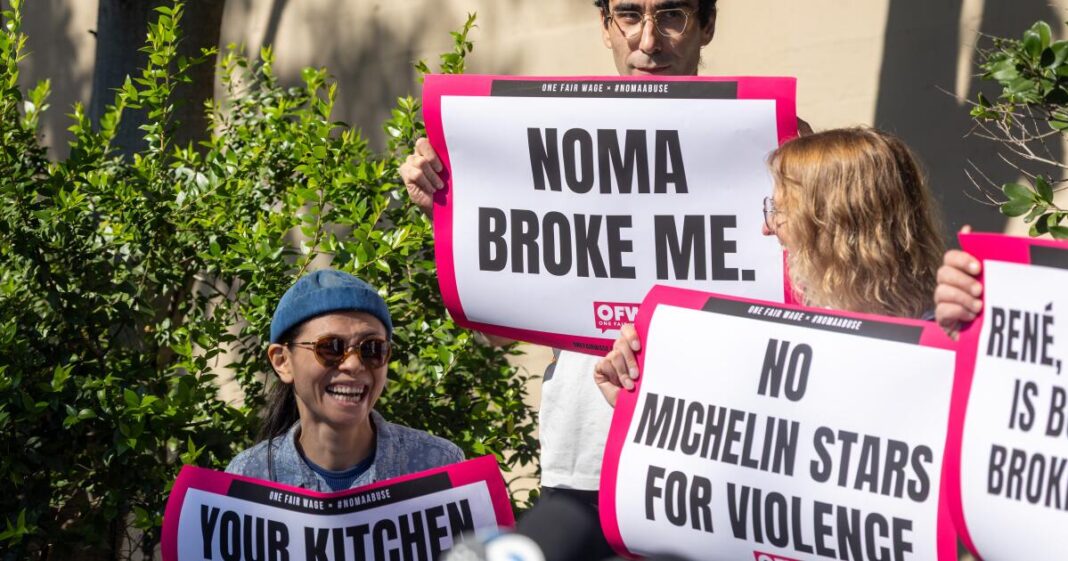
Among those demanding accountability is Jason Ignacio White, Noma’s former head of fermentation. His use of social media to share disturbing accounts from past employees has catalyzed broader discussions about labor rights in the restaurant industry. During a protest at the site of a recent Noma pop-up in Los Angeles, he held signs like “Noma broke me” and “You bought a ticket to a crime scene,” bringing pressing issues of worker rights and mental health to the forefront.
The narrative surrounding Noma has prompted sponsors like American Express to withdraw their support, signaling a shift in how brands engage with establishments linked to abusive conduct.
Acknowledgment and Accountability
In light of the backlash, Redzepi announced he would step back from Noma and MAD, the nonprofit organization he founded. In his statement, he acknowledged his past behavior and expressed a commitment to personal growth. Still, the gravity of the allegations raises questions about whether public apologies can ever be enough to repair the damage done.
It is worth noting that Noma shuttered its doors permanently a few years ago, transitioning to a pop-up model that relies significantly on unpaid labor from eager interns looking to bolster their resumes. This transition reflects the unsustainable nature of the traditional restaurant model, a realization that emanates from the very abuses that have become synonymous with it.
A Reflection on Passion and Fury
Documentaries like “Noma at Boiling Point” provide a candid look at the soul of kitchens that push the limits of creativity and intensity. Through the lens of the camera, viewers witness Redzepi’s fiery temper and his struggle to channel passion into his work, showing glimpses of vulnerability that make the story even more complex. The pressures of culinary innovation can breed hostility, resulting in moments of explosive anger and emotional turmoil.
Behind every exquisite dish, there is a human story marked by sacrifice, aspiration, and, at times, deep-seated pain. Redzepi’s journey epitomizes the duality of pursuit—where brilliance can coexist with brutality, creating a culinary zeitgeist that demands reflection from both diners and industry leaders.
The Bigger Picture
Redzepi’s trajectory is a microcosm of a broader issue within the culinary world—one that questions the nature of excellence, the human cost associated with it, and the ethics of patronage in an industry that often falls prey to unchecked power dynamics. From the grand plate to the unseen scars of those who prepare our meals, the conversation around ethics in fine dining is not just about food—it’s a critical examination of who we are as a society that celebrates such culinary virtuosos while grappling with their darker legacies.